The short answer
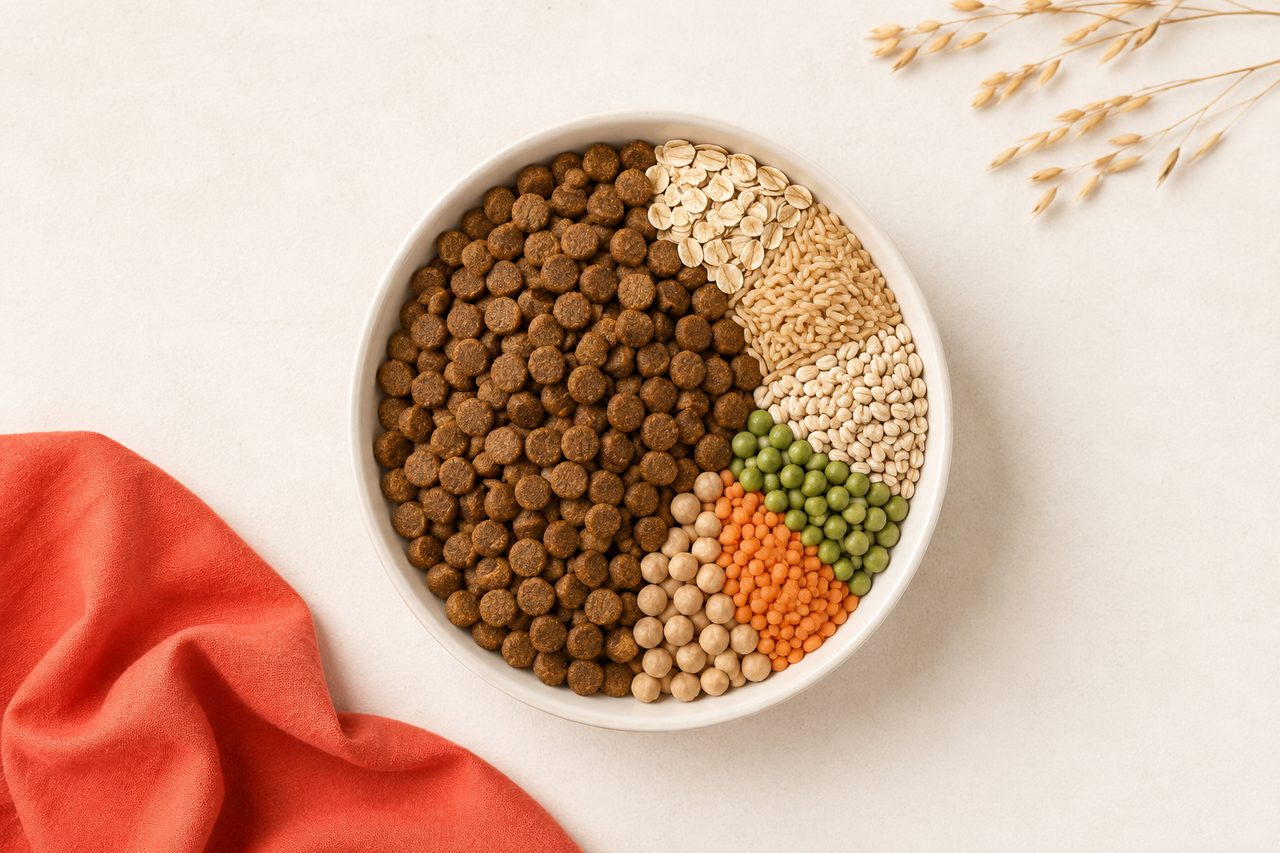
For most dogs and cats, grain-free food is not nutritionally superior to food that contains grains. Grains like rice, oats, and barley are well-tolerated by the vast majority of pets and provide valuable nutrients including fiber, B vitamins, and sustained energy.
The "grain-free is better" idea took off around 2015, fueled by human diet trends and marketing. But veterinary nutritionists have been clear: true grain allergies are rare, affecting fewer than 1% of dogs overall. And when a dog does have a confirmed food allergy, the trigger is far more likely to be an animal protein like beef, dairy, or chicken than a grain. For cats, grain allergies are similarly uncommon.
If your pet has a confirmed food sensitivity, the trigger is almost always a specific protein (like chicken or beef), not grains. An ingredient-by-ingredient approach is more effective than blanket grain avoidance.
What happened with the FDA and DCM
In 2018, the FDA began investigating a potential link between certain grain-free diets and dilated cardiomyopathy (DCM), a serious heart condition. The investigation focused on diets high in legumes (peas, lentils, chickpeas) and potatoes, ingredients commonly used to replace grains.
It's important to note: the FDA has not concluded that grain-free diets cause DCM. The science is still evolving. But many veterinary nutritionists now advise that unless there's a specific medical reason, choosing a grain-inclusive diet is a reasonable precaution.

When grain-free might make sense
There are a small number of situations where a grain-free diet could be appropriate:
- Confirmed grain sensitivity: diagnosed through a veterinary elimination trial (not a mail-in test). This is genuinely rare.
- Specific veterinary recommendation: some therapeutic diets happen to be grain-free for formulation reasons, not because grains are harmful.
In both cases, the decision should come from your vet, not from a pet store employee or a brand's marketing page.
What to look for instead
Rather than focusing on whether a food is grain-free, focus on markers that actually predict quality:
- AAFCO complete & balanced statement: confirms the food meets minimum nutritional requirements for your pet's life stage.
- Manufacturer feeding trials or formulation: brands that conduct feeding trials provide an extra layer of validation.
- WSAVA-aligned manufacturer practices: employing board-certified veterinary nutritionists, owning manufacturing facilities, and publishing nutrient data.
- Ingredient fit for your pet: matching the protein source, fat level, and fiber content to your pet's specific needs and tolerances.
KibbleLab doesn't filter foods as "grain-free good" or "grain-free bad." Instead, we match foods based on your pet's specific ingredients to avoid, nutritional needs, and life stage, so you get recommendations that are relevant, not trend-driven.
Grains aren't "filler"; they're functional ingredients that most pets digest easily.
The bottom line
Grain-free is a marketing category, not a nutrition category. Grains aren't "filler"; they're functional ingredients that most pets digest easily. If your pet is thriving on a grain-inclusive food, there's no evidence-based reason to switch.
If you suspect your pet has a food sensitivity, the most reliable path is working with your vet on a structured investigation, not eliminating an entire ingredient group based on a label trend.
Grain-free is a marketing category, not a nutrition category. Unless your vet has diagnosed a specific grain sensitivity, grain-inclusive diets are a well-supported choice for most pets. Focus on overall food quality, not label trends.
Sources & Further Reading
- FDA. "FDA Investigation into Potential Link between Certain Diets and Canine Dilated Cardiomyopathy." fda.gov.
- Freeman, L.M. et al. "Diet-associated dilated cardiomyopathy in dogs: what do we know?" JAVMA, 2018.
- Mueller, R.S., Olivry, T. & Prelaud, P. "Critically appraised topic on adverse food reactions of companion animals (2): common food allergen sources in dogs and cats." BMC Veterinary Research, 2016;12:9.
- WSAVA Global Nutrition Committee. "Guidelines on Selecting Pet Foods." 2021.
Based on published veterinary nutrition research (WSAVA, AAFCO, FDA)
KibbleLab Explains articles are educational, and are not veterinary advice. Before starting an elimination diet, a weight plan, or any major diet change, talk to your veterinarian.

 Continue with Google
 Continue with Facebook