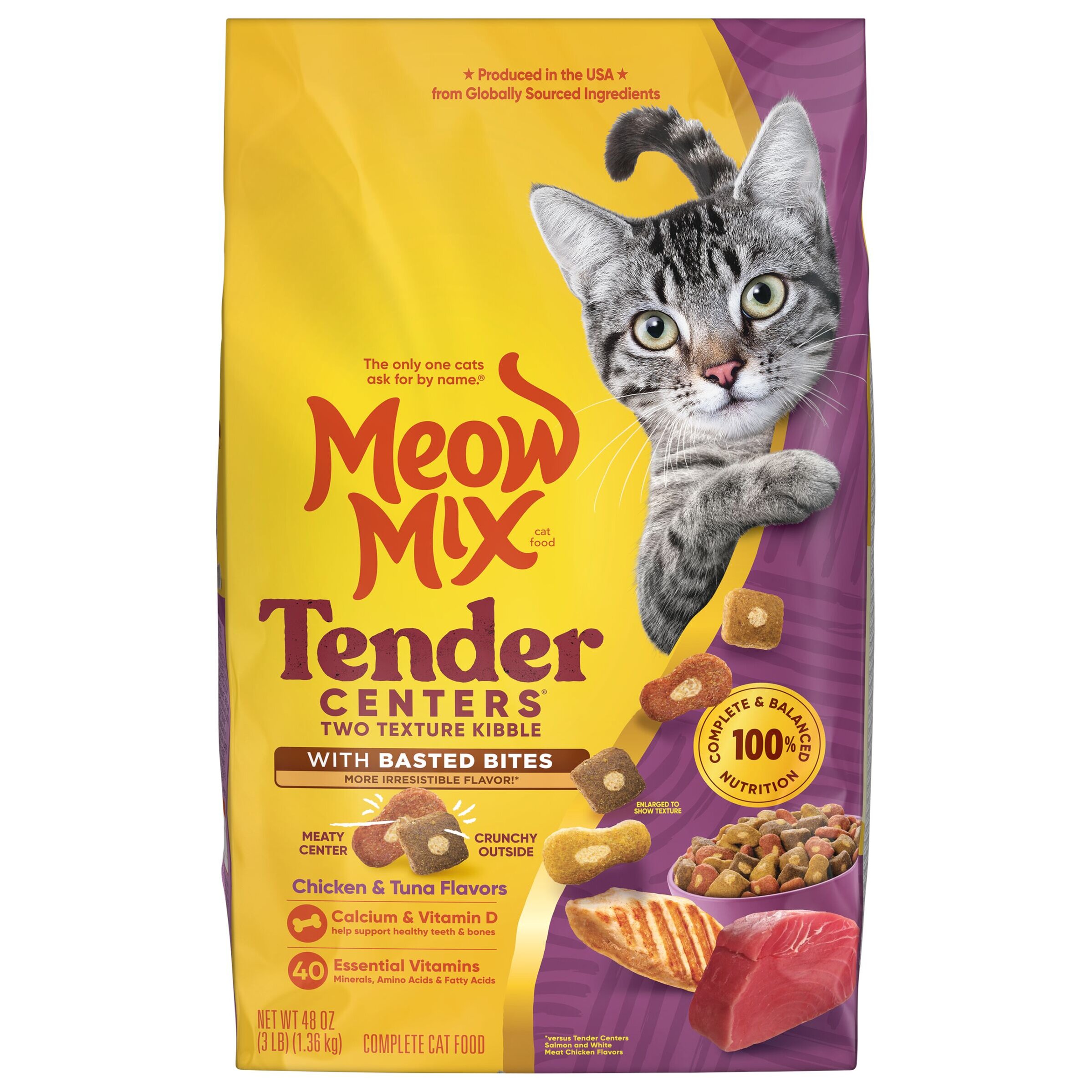
Tender Centers With Basted Bites Chicken & Tuna Flavors Dry Cat Food
Verified Sep 2, 2026
This is a dry, dual-texture kibble for cats of all life stages, with a crunchy outside and softer center. It uses chicken by-product meal and tuna meal as key animal protein sources, along with corn, soybean meal, and wheat for additional protein and energy. The formula is AAFCO-formulated for complete and balanced nutrition and includes added vitamins, minerals, and taurine for everyday feeding.
Jump to ingredientsAffiliate link · may earn a commission at no extra cost to you
Solid Option
Nutritionally, this is a complete and balanced dry food for cats at all life stages, including kittens and adults, with adequate protein and fat levels for most healthy pets. It relies heavily on plant ingredients (corn, soybean meal, wheat) for calories and some protein, with chicken by-product meal and tuna meal supplying animal protein. It’s a generally acceptable, mid-range option, though the use of multiple common allergens, sugars, artificial colors, and BHA means it may not be the best fit for more sensitive cats or owners seeking a more streamlined ingredient list.
Computed from 4 of 4 applicable checks. Missing data is skipped, never counted against a food.
The KibbleLab Score (1–10) is assessed from publicly available product data. Our evaluation is science-based, not marketing-based.
KibbleLab may earn an affiliate commission when you buy through a link. No one can pay for a higher score, or to change what we recommend for your pet.
At a Glance
KibbleLab Review
Strengths
- Meets AAFCO nutrient profiles for all life stages by formulation, so it can be used as a sole diet for kittens and adults if needed.
- Decent protein level for a dry cat food (31% minimum), with named animal protein sources (chicken by-product meal and tuna meal) included.
- Includes essential nutrients important for cats, such as taurine, calcium, phosphorus, selenium, and vitamin E, along with a full vitamin–mineral premix.
- Energy density (about 3,490 kcal/kg) is appropriate for most indoor cats when portioned correctly.
Considerations
- Primary ingredients are ground corn, soybean meal, and whole wheat, with animal proteins appearing slightly lower, so a significant share of the protein is plant-based rather than from meat or fish.
- Contains several common allergens for cats (chicken, fish, soy, wheat), so it would not be suitable for cats with known sensitivities to any of these ingredients.
- Includes added sugars (corn syrup), artificial colors (titanium dioxide, Yellow 5, Red 40, Blue 2), and the preservative BHA, which some owners prefer to avoid even though they are considered safe at regulated levels.
- Fat level (11% minimum) is on the moderate side for a cat food; very active or underweight cats may do better on a diet with higher fat and overall calorie density.
Full Ingredient List
Ingredients and analysis reflect manufacturer data at the time of our last update and can change without notice. Always check the actual product packaging before feeding.
Ingredient filtering helps identify compatible options but is not a substitute for a veterinary elimination diet.
Top 5 Ingredients Explained
01
Corn
Corn is commonly used in dog and cat foods as a digestible source of carbohydrates and calories, and it also provides some plant protein, fiber, B vitamins and minerals while helping with kibble structure and palatability. While generally safe and economical, corn is relatively high in starch and has an incomplete amino acid profile for obligate carnivores (cats), can be a source of mycotoxin contamination if poorly stored, and although true corn allergies are uncommon, some pets may be sensitive, so quality and proper formulation with animal proteins are important.
View ingredient
02
Soybean
Soybean is a common plant-based ingredient in pet foods used as a concentrated protein and fat source (in forms such as soybean meal, soy protein concentrate/isolate, and soybean oil) that supplies essential amino acids, calories, and beneficial polyunsaturated fats. It can be a cost-effective, digestible protein for many dogs but is less ideal as the sole protein for obligate carnivores like cats and may trigger allergies or deliver phytoestrogens and antinutritional factors (e.g., trypsin inhibitors, phytates) that are typically reduced by proper processing, so diets using soy should be balanced and monitored.
View ingredient
03
Chicken By-Product
Chicken by-product is a common protein ingredient in pet foods made from edible parts of the bird not typically consumed by people—such as organs (liver, heart), necks and other tissues—and is used to add protein, flavor and nutrient density. It can provide concentrated protein, essential amino acids, B vitamins and minerals (and may contribute taurine when organ meats are included), but composition and quality vary by source, so pet parents concerned about sourcing, higher ash/fat content or chicken allergies should check the manufacturer’s labeling and quality standards.
04
Corn Protein
Corn protein is a plant-derived concentrated protein (often from corn gluten meal or corn protein isolate) used in dry pet foods to increase crude protein content and aid kibble texture; it supplies digestible plant-based amino acids but is lower in certain essential amino acids, particularly lysine, compared with animal proteins. It is an economical and sustainable ingredient but should be balanced with complementary animal proteins or supplemented amino acids—especially for cats, which need high-quality animal-based protein—and some pets can be sensitive or allergic to corn.
05
Beef Tallow
Beef tallow is rendered beef fat used in pet foods as a concentrated energy and flavoring ingredient, providing dietary lipids that improve palatability and supply mainly saturated and monounsaturated fatty acids though it is not a notable source of essential omega‑3s. It can help support skin and coat condition and increase caloric density, but should be used in moderation because its high fat content can promote weight gain and may trigger gastrointestinal upset or pancreatitis in fat‑sensitive animals, and product quality/processing affect freshness and safety.
Nutritional Breakdown
How to read As Fed versus Dry Matter
As fed shows the numbers straight off the label, water included. Dry matter removes the water so you can compare a wet food and a dry food fairly.What is calorie density
How many calories the food packs per unit. Denser foods mean smaller portions for the same calories.Not sure how much of this to feed?
The right daily portion depends on your cat's weight, age, and activity level. Create a free account, add your cat, and get their daily calories and portion sizes.
Product Details & Brand
Product Specs
AAFCO Nutritional Adequacy
What is AAFCO
Association of American Feed Control Officials. It sets the nutritional
adequacy standards US pet foods are measured against.
What is AAFCO
Association of American Feed Control Officials. It sets the nutritional adequacy standards US pet foods are measured against.Brand
Meow Mix is a well-known cat food brand famous for its advertising campaigns and wide availability. It offers dry and wet cat food products emphasizing taste appeal for cats.
Manufacturer
Products are manufactured in company-owned and partner facilities under the oversight of The J.M. Smucker Company’s quality assurance program, following FDA and AAFCO regulatory guidelines for pet food production.
Manufacturing details are compiled from public sources and not independently verified; they may not reflect contract manufacturing or co-packing.
Recall History
No recall is listed for Meow Mix Tender Centers With Basted Bites Chicken & Tuna Flavors Dry Cat Food.
Source: FDA animal food recall listings back to January 2019 · Checked daily, last on Oct 15, 2026
Sign up for the full picture
Ingredient Check
We'll check every ingredient against your pet's profile.
Feeding Calculator
Personalized portion sizes based on your pet's weight, age, and activity level.
Side-by-Side Comparison
Compare this food with alternatives to find the best fit.
Similar Foods

Post your cat's report card and challenge friends to check their food.
Frequently Asked Questions
Has Meow Mix ever been recalled?
We have no recalls on record for Meow Mix. We track the FDA's animal food recall listings back to January 2019 and publish every pet food recall automatically. A filing that isn't pet food may not appear here.
How does KibbleLab rate foods?
Our scores are based on ingredient composition, nutritional profile, AAFCO compliance, and health considerations. We don't penalize by-products, grains, or synthetic preservatives. Brands cannot pay for higher scores.
Is KibbleLab a substitute for veterinary advice?
No. KibbleLab provides data-driven food analysis, not medical advice. Always consult your veterinarian before making dietary changes, especially for pets with health conditions.
KibbleLab provides informational content only. This is not veterinary advice. Always consult a qualified veterinarian before changing your pet's diet.
KibbleLab may earn affiliate commissions through product links. No one can pay for a higher score, or to change what we recommend for your pet.
Product data sourced from manufacturer websites, AAFCO statements, and FDA recall listings. Last verified dates reflect our most recent data check. We track the FDA's animal food recall listings back to January 2019 and publish every pet food recall automatically. A filing that isn't pet food may not appear here.

 Continue with Google
 Continue with Facebook