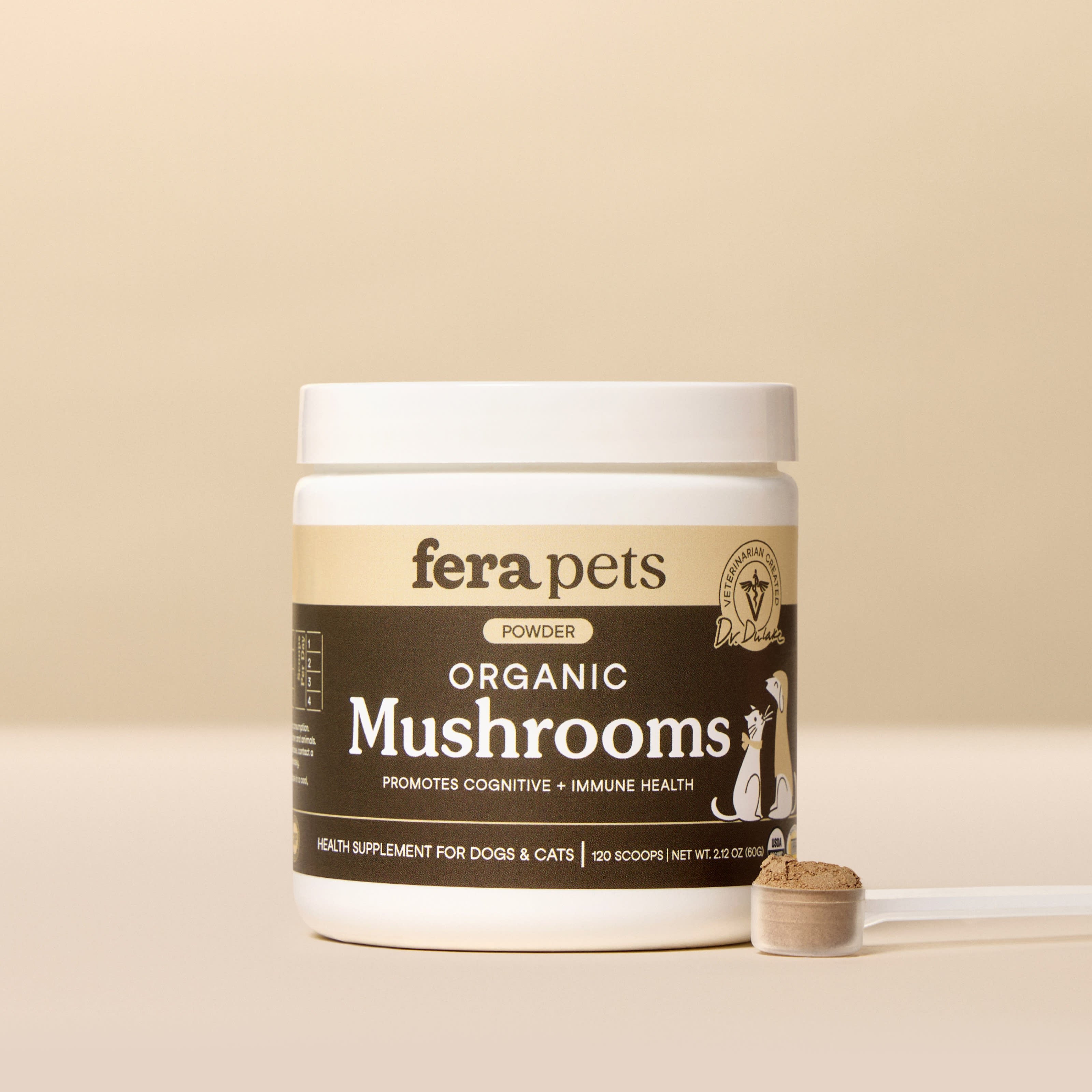
Organic Mushroom Blend Powder Supplement
Verified May 23, 2026
A powdered mushroom supplement for cats and dogs that provides a blend of 10 organic mushroom species, using only the fruiting bodies. It’s designed to be added in small amounts to the regular diet to supply additional beta glucans and other mushroom compounds that may support immune and overall wellness. This product is very low in calories and does not replace a complete and balanced pet food.
This is a thoughtfully formulated mushroom supplement using a variety of organic mushroom fruiting bodies, which is exactly the part of the mushroom most studied for beta glucan content. It can be a reasonable add-on for generally healthy dogs and cats whose owners are interested in mushroom-based support, as long as it is used alongside a complete and balanced diet. As with any supplement, it’s best used under guidance if your pet has medical conditions or is on medications, since it is not an AAFCO-tested complete diet.
The KibbleLab Score (1–10) is assessed from publicly available product data. Our evaluation is science-based, not marketing-based.
KibbleLab may earn an affiliate commission when you buy through a link. No one can pay for a higher score, or to change what we recommend for your pet.
At a Glance
KibbleLab Review
Strengths
- Contains a diverse blend of 10 different organic mushrooms, all clearly named, which may provide a broad range of bioactive compounds such as beta glucans.
- Uses 100% mushroom fruiting bodies rather than grain-based or mycelium-heavy blends, which generally means more of the desired active polysaccharides and fewer starchy fillers.
- Very low calorie and in a simple powder form, making it easy to mix with most foods without significantly affecting your pet’s daily calorie intake.
- Free from added grains, starches, and non-mushroom fillers, which is helpful for pets on more restricted ingredient diets.
Considerations
- This is a supplement only and does not provide complete and balanced nutrition, so it must always be fed together with a full, AAFCO-compliant pet food.
- Mushrooms are not common allergens, but any new supplement can cause digestive upset in sensitive pets; introducing it gradually and monitoring for vomiting, diarrhea, or changes in appetite is important.
- Pets with existing health conditions (especially autoimmune disease, bleeding disorders, or those on immune-modulating or diabetes medications) should have this reviewed by a veterinarian before use, as mushroom products can interact with some treatments.
- No specific dosing ranges by body weight are listed here, so you’ll need to follow the manufacturer’s weight-based instructions on the package or website rather than just using a single scoop amount for all pets.
Full Ingredient List
Ingredients and analysis reflect manufacturer data at the time of our last update and can change without notice. Always check the actual product packaging before feeding.
Ingredient filtering helps identify compatible options but is not a substitute for a veterinary elimination diet.
Top 5 Ingredients Explained
01
Lion's Mane
Lion’s mane (Hericium erinaceus) is used in pet foods and supplements as a functional ingredient rather than a primary nutrient, prized for bioactive compounds (hericenones, erinacines and beta‑glucans) that may support cognitive function, nerve health, immune modulation and digestive wellbeing. While generally well tolerated by dogs and cats, evidence in pets is limited so benefits are considered supportive rather than curative; pets can occasionally experience gastrointestinal upset or allergic reactions, and owners should use products from reputable sources and consult their veterinarian—especially for animals on medications or with immune conditions.
02
Reishi
Reishi (Ganoderma lucidum) is a medicinal mushroom used in pet foods and supplements as a functional ingredient for immune support and antioxidant benefits rather than as a primary nutrient. It contains polysaccharides and triterpenes that may help modulate immunity and inflammation, but evidence in dogs and cats is limited, product quality and dosing vary, and it can interact with immunosuppressive or anticoagulant medications or cause gastrointestinal upset, so consult your veterinarian before use.
03
Shiitake
Shiitake mushrooms are used in pet foods mainly as a flavoring/functional ingredient that provides modest fiber, B vitamins, minerals and bioactive beta‑glucans that may support immune health. When cooked and included in small amounts they are generally safe and palatable for dogs and cats, but should be used only as a supplement to complete diets because raw or improperly prepared shiitake can cause gastrointestinal upset, rare skin reactions, or carry contaminants, and mushrooms from unknown sources should be avoided.
04
Cordyceps
Cordyceps is a medicinal mushroom often included in pet foods or supplements as a functional ingredient rather than a primary nutrient, marketed for its antioxidant properties and potential to support energy, respiratory function, and immune health in dogs and cats. Evidence in companion animals is limited, so benefits are not guaranteed; quality and dosing vary between products and there can be risks of gastrointestinal upset or interactions with medications (for example immunosuppressants or blood thinners), so consult your veterinarian before use, especially for pregnant, nursing, or medicated pets.
05
Maitake
Maitake (Grifola frondosa) is a culinary and medicinal mushroom used in pet foods and supplements as a functional ingredient that supplies dietary fiber and bioactive polysaccharides (notably beta‑glucans) thought to support immune response and provide antioxidant benefits. It should be considered a complementary ingredient rather than a primary nutrient; use food‑grade, cultivated sources and consult your veterinarian—especially for pets with immune disorders, those on immunosuppressants, pregnant animals, or pets prone to gastrointestinal sensitivity—as wild mushrooms can be toxic and overconsumption may cause digestive upset.
Product Details & Brand
Product Specs
Brand

Fera Pets is a premium pet supplement brand offering veterinarian-formulated supplements for dogs and cats, including probiotics, joint support, and omega-3 products. The brand targets pet owners seeking science-backed natural supplements for holistic health and longevity.
Visit Fera PetsManufacturer
Fera Pets products are formulated under veterinary guidance and manufactured in FDA-registered, Good Manufacturing Practice (GMP) compliant facilities in the United States. They follow stringent quality control protocols and source ingredients that meet human-grade standards.
Manufacturing details are compiled from public sources and not independently verified; they may not reflect contract manufacturing or co-packing.
Recall History
Fera Pets Organic Mushroom Blend Powder Supplement has no recalls since 2014.
Source: FDA Pet Food Recall Database · Monitored daily
Sign up for the full picture
Feeding Calculator
Personalized portion sizes based on your pet's weight, age, and activity level.
Get startedSimilar Foods


Post your dog's report card and challenge friends to check their food.
Frequently Asked Questions
Has Fera Pets ever been recalled?
We have no recalls on record for Fera Pets. We monitor the FDA Pet Food Recall Database daily.
How does KibbleLab rate foods?
Our scores are based on ingredient composition, nutritional profile, AAFCO compliance, and health considerations. We don't penalize by-products, grains, or synthetic preservatives. Brands cannot pay for higher scores.
Is KibbleLab a substitute for veterinary advice?
No. KibbleLab provides data-driven food analysis, not medical advice. Always consult your veterinarian before making dietary changes, especially for pets with health conditions.
KibbleLab provides informational content only. This is not veterinary advice. Always consult a qualified veterinarian before changing your pet's diet.
KibbleLab may earn affiliate commissions through product links. No one can pay for a higher score, or to change what we recommend for your pet.
Product data sourced from manufacturer websites, AAFCO statements, and FDA recall database. Last verified dates reflect our most recent data check.

 Continue with Google
 Continue with Facebook