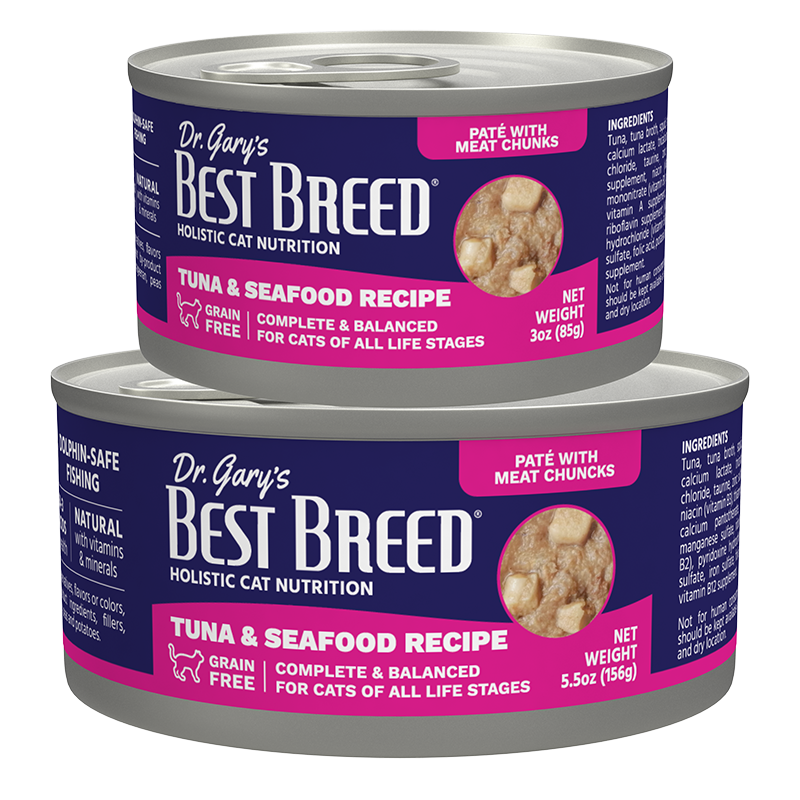
Tuna and Seafood Recipe Wet Cat Food
Verified Jun 11, 2026
This is a grain-free, meat-rich canned pate for cats that uses tuna, squid, and shrimp as its primary protein sources. It’s formulated to be complete and balanced for both kittens and adult cats, with a soft texture and moderate calorie density typical of wet foods. The fish-based recipe naturally provides omega-3 fatty acids, which can support healthy skin and coat in many cats.
This is a high-quality wet cat food centered around named seafood proteins, with no legumes, potatoes, or artificial additives. It’s formulated to meet AAFCO standards for both growth and adult maintenance, so it can be used for kittens, adults, and most seniors as long as they tolerate fish well. It would suit cats who enjoy fish-based diets and whose veterinarians are comfortable with fish as a main protein source.
The KibbleLab Score (1–10) is assessed from publicly available product data. Our evaluation is science-based, not marketing-based.
KibbleLab may earn an affiliate commission when you buy through a link. No one can pay for a higher score, or to change what we recommend for your pet.
At a Glance
KibbleLab Review
Strengths
- Named animal proteins (tuna, squid, shrimp) make up the core of the recipe, providing species-appropriate protein for cats.
- Grain-free without relying on peas, lentils, or potatoes, which avoids current concerns about legume-heavy formulations.
- Complete and balanced for both growth and maintenance per AAFCO formulation, so it’s appropriate for kittens and adults when fed as the main diet.
- Wet pate texture with relatively low fat and moderate calories per can can be helpful for cats who need portion control or extra water intake from their food.
Considerations
- Fish-based diets can be an issue for cats with seafood allergies or intolerances, and fish is also a common feline allergen.
- The fat level is on the lower side for a canned food, which may not suit very active or underweight cats that need a higher-calorie, higher-fat diet.
- AAFCO adequacy is based on formulation rather than feeding trials, so actual digestibility and long-term performance have not been feeding-test verified.
Full Ingredient List
Ingredients and analysis reflect manufacturer data at the time of our last update and can change without notice. Always check the actual product packaging before feeding.
Ingredient filtering helps identify compatible options but is not a substitute for a veterinary elimination diet.
Top 5 Ingredients Explained
01
Tuna
Tuna is commonly used in pet foods as a highly palatable animal protein and flavor enhancer, providing readily digestible protein and omega‑3 fatty acids (EPA/DHA) along with B vitamins for both dogs and cats. While nutritionally beneficial, tuna can be high in mercury or sodium (especially canned), and feeding it exclusively or frequently may cause nutrient imbalances (including risks for thiamine or taurine issues in cats), so it should be offered in moderation as part of a complete, balanced diet.
02
Tuna Broth
Tuna broth is used in pet foods and toppers mainly as a flavor enhancer and moisture source to improve palatability and encourage hydration; it may contribute small amounts of fish-derived protein and omega‑3s but is not a significant standalone protein source. While it can make meals more appealing, pet parents should watch for added salt or preservatives, potential fish allergies, and contaminants such as mercury or histamine, and remember tuna broth does not provide a complete, balanced nutrient profile (including taurine for cats).
03
Squid
Squid is used in pet foods as a novel animal protein and flavorful seafood ingredient, supplying highly digestible protein, taurine (important for cats), and marine fatty acids plus minerals that can support skin, coat and overall nutrition. It is palatable and nutrient-dense but can trigger seafood allergies in some pets and may carry risks if poorly handled (histamine, parasites or contaminants), so it should be sourced and processed safely and used with caution in animals with known sensitivities or certain metabolic conditions.
04
Shrimp
Shrimp is used in pet foods and treats as a lean, palatable animal protein and flavor enhancer that supplies high-quality amino acids and nutrients such as vitamin B12, selenium, phosphorus, small amounts of omega-3s and taurine (important for cats). While nutritious and often well-accepted by dogs and cats, owners should watch for shellfish allergies, high cholesterol and added sodium in processed products, and avoid shells or raw/undercooked shrimp to prevent choking and microbial or contaminant risks—choose cooked, deboned, responsibly sourced shrimp when possible.
05
Tapioca Starch
Tapioca starch is a purified carbohydrate used in pet foods mainly as a thickener, binder and easily digestible energy source, contributing virtually no protein, fat, vitamins or minerals. It is low‑allergy and gluten‑free, but because it is a high‑glycemic, low‑nutrient filler it should be limited in diets for overweight or diabetic pets and not relied on for essential nutrition.
Nutritional Breakdown
How to read As Fed versus Dry Matter
As fed shows the numbers straight off the label, water included. Dry matter removes the water so you can compare a wet food and a dry food fairly.What is calorie density
How many calories the food packs per unit. Denser foods mean smaller portions for the same calories.Product Details & Brand
Product Specs
AAFCO Nutritional Adequacy
What is AAFCO
Association of American Feed Control Officials. It sets the nutritional
adequacy standards US pet foods are measured against.
What is AAFCO
Association of American Feed Control Officials. It sets the nutritional adequacy standards US pet foods are measured against.Brand
Best Breed is a premium holistic pet food brand focusing on naturally formulated diets for dogs and cats. The brand highlights its veterinarian-developed recipes, use of high-quality animal proteins, and exclusion of artificial preservatives or ingredients. It targets pet owners seeking vet-formulated, natural, holistic nutrition options.
Visit Best BreedManufacturer
Products are made in the United States with a focus on small-batch production to ensure freshness and quality. Best Breed maintains rigorous ingredient sourcing and safety protocols and follows AAFCO nutritional guidelines.
Manufacturing details are compiled from public sources and not independently verified; they may not reflect contract manufacturing or co-packing.
Recall History
Best Breed Tuna and Seafood Recipe Wet Cat Food has no recalls since 2014.
Source: FDA Pet Food Recall Database · Monitored daily
Sign up for the full picture
Feeding Calculator
Personalized portion sizes based on your pet's weight, age, and activity level.
Get startedSimilar Foods
Post your cat's report card and challenge friends to check their food.
Frequently Asked Questions
Has Best Breed ever been recalled?
We have no recalls on record for Best Breed. We monitor the FDA Pet Food Recall Database daily.
How does KibbleLab rate foods?
Our scores are based on ingredient composition, nutritional profile, AAFCO compliance, and health considerations. We don't penalize by-products, grains, or synthetic preservatives. Brands cannot pay for higher scores.
Is KibbleLab a substitute for veterinary advice?
No. KibbleLab provides data-driven food analysis, not medical advice. Always consult your veterinarian before making dietary changes, especially for pets with health conditions.
KibbleLab provides informational content only. This is not veterinary advice. Always consult a qualified veterinarian before changing your pet's diet.
KibbleLab may earn affiliate commissions through product links. No one can pay for a higher score, or to change what we recommend for your pet.
Product data sourced from manufacturer websites, AAFCO statements, and FDA recall database. Last verified dates reflect our most recent data check.

 Continue with Google
 Continue with Facebook