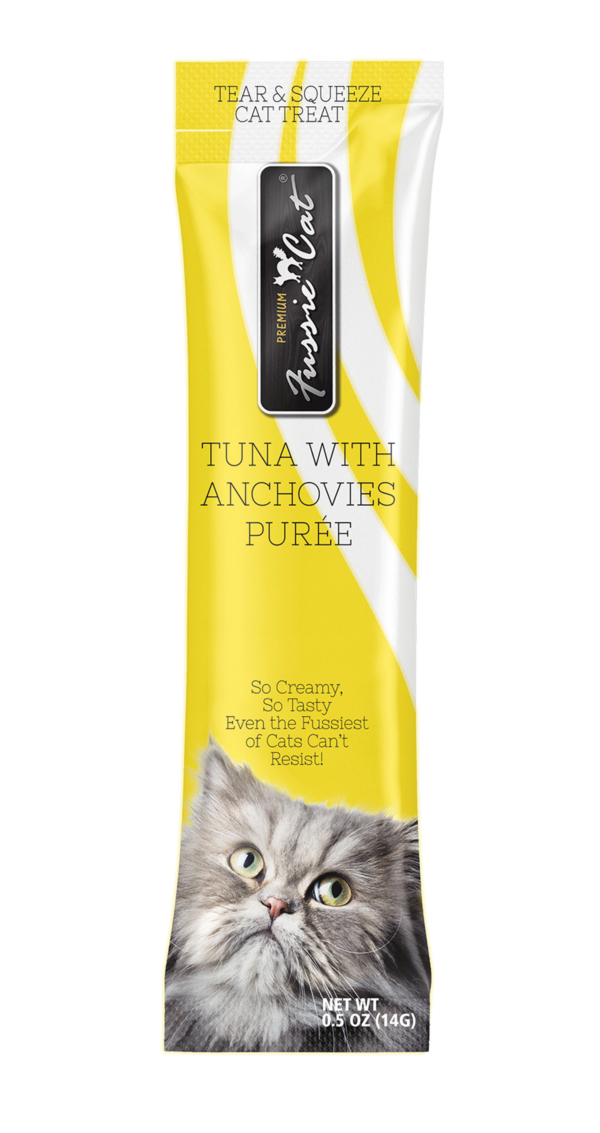
Tuna With Anchovies In Goat Milk Gravy Wet Cat Food
Verified Aug 28, 2026
This is a grain-free canned food for cats of all life stages, featuring tuna and anchovies as the main animal protein sources in a goat milk-based gravy. It provides moderate protein and low fat with added taurine, DHA, and a full vitamin-mineral mix for balanced daily nutrition. The high moisture content helps with hydration, and goat milk plus added prebiotic (fructooligosaccharide) may be gentle on many cats’ digestive systems.
Jump to ingredientsAffiliate link · may earn a commission at no extra cost to you
Strong Choice
Nutritionally, this is a well-balanced, moisture-rich wet food suitable for kittens through adult and senior cats, as long as they tolerate fish proteins. It offers animal-based protein from tuna and anchovies, added taurine, and DHA, which are important for cats’ hearts, brains, and eyes. The relatively low fat and calorie density can work well for indoor or less active cats, but very active or underweight cats may need larger portions or a higher-calorie option.
Computed from 4 of 4 applicable checks. Missing data is skipped, never counted against a food.
The KibbleLab Score (1–10) is assessed from publicly available product data. Our evaluation is science-based, not marketing-based.
KibbleLab may earn an affiliate commission when you buy through a link. No one can pay for a higher score, or to change what we recommend for your pet.
At a Glance
Where these benefits come from
Benefits the manufacturer highlights in its own product marketing. KibbleLab lists them for reference and does not verify these claims.KibbleLab Review
Strengths
- Complete and balanced to AAFCO standards for all life stages, so it can be fed as a primary diet to kittens and adults.
- High moisture (over 80%) supports hydration, which is especially helpful for cats that don’t drink much water on their own.
- Fish-based protein sources (tuna and anchovy) provide essential amino acids and naturally supply omega-3s, including DHA (specifically listed in the analysis).
- Includes taurine and a full vitamin-mineral premix, plus a prebiotic (fructooligosaccharide) that may support healthy digestion.
Considerations
- Relies entirely on fish proteins, which is a common allergen for some cats; not ideal if your cat has known fish sensitivities.
- Fat content is on the lower side for a wet food, so very active, growing, or hard-keeping cats may require higher overall calorie intake to maintain weight.
- Grain-free but uses tapioca starch and multiple gums (xanthan and guar) as thickeners; most cats tolerate these well, but a few with very sensitive GI tracts can be gassy or loose on gum-heavy foods.
Full Ingredient List
Ingredients and analysis reflect manufacturer data at the time of our last update and can change without notice. Always check the actual product packaging before feeding.
Ingredient filtering helps identify compatible options but is not a substitute for a veterinary elimination diet.
Top 5 Ingredients Explained
01
Tuna
Tuna is commonly used in pet foods as a highly palatable animal protein and flavor enhancer, providing readily digestible protein and omega‑3 fatty acids (EPA/DHA) along with B vitamins for both dogs and cats. While nutritionally beneficial, tuna can be high in mercury or sodium (especially canned), and feeding it exclusively or frequently may cause nutrient imbalances (including risks for thiamine or taurine issues in cats), so it should be offered in moderation as part of a complete, balanced diet.
View ingredient
02
Water
Water is an essential nutrient and the primary solvent and moisture component in pet foods, especially wet and canned diets, and is also used in processing and to adjust texture and palatability. It is vital for digestion, nutrient transport, temperature regulation and waste removal in dogs and cats; pets must have constant access to clean water as dehydration can quickly lead to serious health issues and requirements increase with activity, heat, or illness, while moisture in wet food can help meet part of their daily needs.
03
Anchovy
Anchovy is a small oily fish commonly used in pet foods and treats as a high‑quality animal protein and palatant that also supplies concentrated omega‑3 fatty acids (EPA/DHA) and, when whole or rendered to meal, micronutrients such as calcium and selenium that support skin and coat, joint, heart and brain health in both dogs and cats. Considerations include variable sodium levels in canned or preserved forms, the (rare) possibility of fish allergy, and the importance of responsible sourcing and handling to minimize contaminants or histamine formation.
View ingredient
04
Goat's Milk
Goat's milk is used in pet foods and treats as a dairy ingredient and supplemental source of digestible protein, fats, calcium, and certain B vitamins, and can serve as a base for milk replacers or probiotic-containing products. Some dogs and cats tolerate goat's milk better than cow's milk because of smaller fat globules and slightly lower lactose, but it is calorie-dense, not a complete diet, can still cause lactose intolerance or allergic reactions in sensitive animals, and should be pasteurized and used cautiously (or avoided) in pets with pancreatitis or weakened immune systems due to raw-milk pathogen risks.
05
Sunflower Oil
Sunflower oil is used in pet foods as a concentrated fat source to increase energy density, palatability and supply linoleic acid (an essential omega‑6) that helps maintain healthy skin and coat. It is beneficial for dogs and cats but is high in omega‑6 and low in omega‑3—so formulas should balance fatty acids to avoid an inflammatory imbalance; it is calorie‑dense (important for weight control and pancreatitis-prone animals) and may require antioxidants or high‑oleic formulations for better shelf stability.
Nutritional Breakdown
How to read As Fed versus Dry Matter
As fed shows the numbers straight off the label, water included. Dry matter removes the water so you can compare a wet food and a dry food fairly.What is calorie density
How many calories the food packs per unit. Denser foods mean smaller portions for the same calories.Not sure how much of this to feed?
The right daily portion depends on your cat's weight, age, and activity level. Create a free account, add your cat, and get their daily calories and portion sizes.
Product Details & Brand
Product Specs
AAFCO Nutritional Adequacy
What is AAFCO
Association of American Feed Control Officials. It sets the nutritional
adequacy standards US pet foods are measured against.
What is AAFCO
Association of American Feed Control Officials. It sets the nutritional adequacy standards US pet foods are measured against.Brand
Fussie Cat offers palatable cat foods emphasizing high protein and moisture content. It is known for its 'cats as connoisseurs' approach, focusing on recipes that appeal to finicky eaters.
Manufacturer
Pets Global partners with trusted U.S.-based manufacturers for its products, maintaining oversight of ingredient sourcing and recipe formulation to ensure food safety and nutritional quality standards. Its products are formulated to meet AAFCO nutrient profiles and follow U.S. FDA manufacturing guidelines.
Manufacturing details are compiled from public sources and not independently verified; they may not reflect contract manufacturing or co-packing.
Recall History
No recall is listed for Fussie Cat Tuna With Anchovies In Goat Milk Gravy Wet Cat Food.
Source: FDA animal food recall listings back to January 2019 · Checked daily, last on Oct 15, 2026
Sign up for the full picture
Ingredient Check
We'll check every ingredient against your pet's profile.
Feeding Calculator
Personalized portion sizes based on your pet's weight, age, and activity level.
Side-by-Side Comparison
Compare this food with alternatives to find the best fit.
Similar Foods


Post your cat's report card and challenge friends to check their food.
Frequently Asked Questions
Has Fussie Cat ever been recalled?
We have no recalls on record for Fussie Cat. We track the FDA's animal food recall listings back to January 2019 and publish every pet food recall automatically. A filing that isn't pet food may not appear here.
How does KibbleLab rate foods?
Our scores are based on ingredient composition, nutritional profile, AAFCO compliance, and health considerations. We don't penalize by-products, grains, or synthetic preservatives. Brands cannot pay for higher scores.
Is KibbleLab a substitute for veterinary advice?
No. KibbleLab provides data-driven food analysis, not medical advice. Always consult your veterinarian before making dietary changes, especially for pets with health conditions.
KibbleLab provides informational content only. This is not veterinary advice. Always consult a qualified veterinarian before changing your pet's diet.
KibbleLab may earn affiliate commissions through product links. No one can pay for a higher score, or to change what we recommend for your pet.
Product data sourced from manufacturer websites, AAFCO statements, and FDA recall listings. Last verified dates reflect our most recent data check. We track the FDA's animal food recall listings back to January 2019 and publish every pet food recall automatically. A filing that isn't pet food may not appear here.

 Continue with Google
 Continue with Facebook