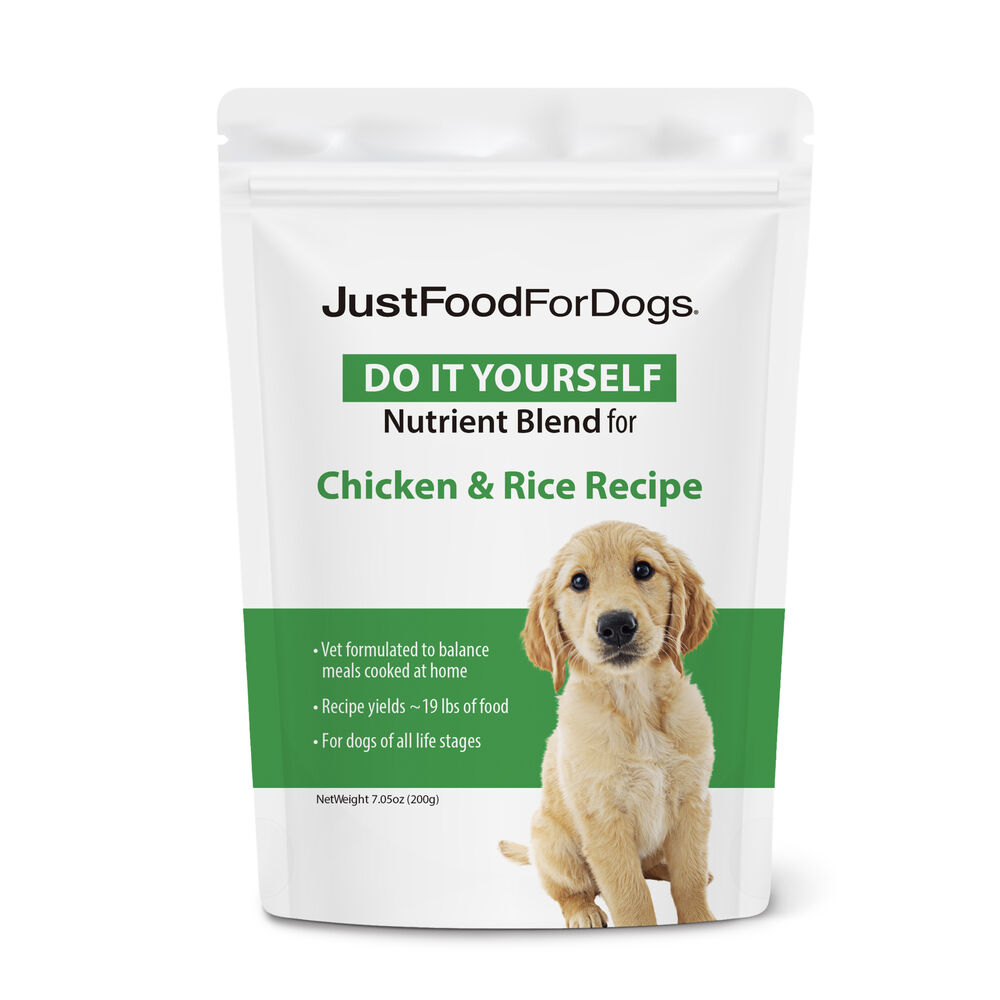

Do It Yourself Nutrient Blend Chicken & Rice Supplement
Verified Sep 8, 2026
This is a powdered vitamin and mineral supplement designed to be mixed with a specific homemade chicken and rice recipe so that the final meal is complete and balanced. It provides the essential nutrients that plain chicken and rice would lack, and is formulated to meet AAFCO standards for all life stages, including large-breed puppies, when used exactly as directed. It’s intended for owners who want to cook for their dogs at home while still covering all the nutritional bases.
Jump to ingredientsAffiliate link · may earn a commission at no extra cost to you
Top Pick
Used correctly with the matching chicken and rice recipe, this nutrient blend can turn a basic home-cooked meal into a complete and balanced diet for dogs of all life stages, including large-breed puppies. The formula relies on well-absorbed mineral chelates and a full complement of essential vitamins and minerals to meet AAFCO standards. Its main limitation is that, on its own or if the recipe is not followed closely, it will not provide balanced nutrition.
Computed from 3 of 3 applicable checks. Missing data is skipped, never counted against a food.
The KibbleLab Score (1–10) is assessed from publicly available product data. Our evaluation is science-based, not marketing-based.
KibbleLab may earn an affiliate commission when you buy through a link. No one can pay for a higher score, or to change what we recommend for your pet.
At a Glance
Where these benefits come from
Benefits the manufacturer highlights in its own product marketing. KibbleLab lists them for reference and does not verify these claims.KibbleLab Review
Strengths
- Formulated to meet AAFCO Dog Nutrient Profiles for all life stages, including large-breed growth, when used with the specified chicken and rice recipe.
- Uses chelated minerals (e.g., zinc, iron, copper, manganese amino acid chelates), which are typically well absorbed and support reliable nutrient delivery.
- Designed specifically to balance a simple chicken-and-rice base, which can help dogs that need to avoid common proteins like beef, fish, or lamb.
- Includes DHA and EPA, which support healthy development in puppies and can be beneficial across life stages.
Considerations
- This product is not a stand-alone food; it only becomes complete and balanced when mixed with the correct amounts of chicken, rice, and other specified ingredients in the provided recipe.
- Because it depends on precise home preparation, measuring errors or recipe substitutions could lead to nutrient imbalances over time.
- The base recipe relies on chicken, which can be a problem for dogs with chicken allergies or sensitivities.
Full Ingredient List
Ingredients and analysis reflect manufacturer data at the time of our last update and can change without notice. Always check the actual product packaging before feeding.
Ingredient filtering helps identify compatible options but is not a substitute for a veterinary elimination diet.
Top 5 Ingredients Explained
01
Dicalcium Phosphate
Dicalcium phosphate is an inorganic mineral supplement commonly added to dog and cat foods to supply concentrated, bioavailable calcium and phosphorus for healthy bone and teeth formation as well as general metabolic processes. It must be used in balanced amounts (typical Ca:P targets ≈1:1–1.4:1) because improper ratios or excess phosphorus can contribute to skeletal problems in growing animals and worsen conditions like chronic kidney disease, so formulation and dosing should be carefully controlled.
02
Potassium Chloride
Potassium chloride is a mineral salt added to pet foods to provide the essential electrolyte potassium (and chloride), helping meet nutrient requirements and support normal fluid balance, nerve conduction, and muscle function. It is useful for electrolyte supplementation but must be used at appropriate levels—excessive potassium can be harmful, may affect palatability, and pets with kidney disease or on certain medications are at higher risk of hyperkalemia.
03
Salt
Salt (sodium chloride) is used in pet foods as a flavor enhancer, mild preservative and a source of essential electrolytes (sodium and chloride), and is often provided in iodized form to help meet iodine requirements for thyroid function; these minerals support nerve and muscle function and fluid balance in dogs and cats. Small, controlled amounts are nutritionally important, but excessive salt can cause dehydration, worsen heart or kidney disease and, in extreme cases, lead to salt toxicity, so pet owners should avoid adding extra table salt or high‑sodium human foods and follow veterinary guidance for animals with medical conditions.
04
Calcium Carbonate
Calcium carbonate is a common mineral supplement and buffering agent in pet foods used to provide dietary calcium, help meet calcium-to-phosphorus balance, and stabilize pH. It supports bone and dental health and is essential for growth, reproduction, and metabolic functions, but excessive calcium (or imbalanced calcium/phosphorus ratios) can cause skeletal problems in growing animals—especially large-breed puppies—so it should be included at appropriate levels determined by a qualified formulation.
05
Magnesium Amino Acid Chelate
Magnesium amino acid chelate is a chelated form of the essential mineral magnesium used in pet foods and supplements to provide a readily absorbed source that supports nerve and muscle function, enzyme reactions, and bone health in dogs and cats. Chelation can improve bioavailability and reduce gastrointestinal upset compared with some inorganic salts, but excessive intake or use in animals with kidney disease or a history of urinary stone issues should be avoided and dosing should follow established nutritional guidelines.
Nutritional Breakdown
How to read As Fed versus Dry Matter
As fed shows the numbers straight off the label, water included. Dry matter removes the water so you can compare a wet food and a dry food fairly.What is calorie density
How many calories the food packs per unit. Denser foods mean smaller portions for the same calories.Not sure how much of this to feed?
The right daily portion depends on your dog's weight, age, and activity level. Create a free account, add your dog, and get their daily calories and portion sizes.
Product Details & Brand
Product Specs
AAFCO Nutritional Adequacy
What is AAFCO
Association of American Feed Control Officials. It sets the nutritional
adequacy standards US pet foods are measured against.
What is AAFCO
Association of American Feed Control Officials. It sets the nutritional adequacy standards US pet foods are measured against.Why this is not complete and balanced
This product is not labeled complete and balanced. It is intended for intermittent or supplemental feeding.Brand

JustFoodForDogs is a premium pet food brand offering freshly prepared, human-grade meals for dogs. The brand emphasizes transparency, nutrition backed by veterinary science, and meals cooked in open kitchens. It caters to discerning pet owners seeking balanced, minimally processed nutrition formulated by veterinary professionals.
Manufacturer
JustFoodForDogs operates open-to-the-public kitchens and facilities where all meals are prepared in accordance with USDA standards for human food. The company adheres to rigorous quality control, using independent laboratory testing for nutrient analysis and safety. Their veterinary team formulates diets based on AAFCO nutrient guidelines and conducts feeding trials.
Manufacturing details are compiled from public sources and not independently verified; they may not reflect contract manufacturing or co-packing.
Recall History
No recall is listed for JustFoodForDogs Do It Yourself Nutrient Blend Chicken & Rice Supplement.
Source: FDA animal food recall listings back to January 2019 · Checked daily, last on Oct 17, 2026
Sign up for the full picture
Ingredient Check
We'll check every ingredient against your pet's profile.
Feeding Calculator
Personalized portion sizes based on your pet's weight, age, and activity level.
Side-by-Side Comparison
Compare this food with alternatives to find the best fit.
Similar Foods



Post your dog's report card and challenge friends to check their food.
Frequently Asked Questions
Has JustFoodForDogs ever been recalled?
We have no recalls on record for JustFoodForDogs. We track the FDA's animal food recall listings back to January 2019 and publish every pet food recall automatically. A filing that isn't pet food may not appear here.
How does KibbleLab rate foods?
Our scores are based on ingredient composition, nutritional profile, AAFCO compliance, and health considerations. We don't penalize by-products, grains, or synthetic preservatives. Brands cannot pay for higher scores.
Is KibbleLab a substitute for veterinary advice?
No. KibbleLab provides data-driven food analysis, not medical advice. Always consult your veterinarian before making dietary changes, especially for pets with health conditions.
KibbleLab provides informational content only. This is not veterinary advice. Always consult a qualified veterinarian before changing your pet's diet.
KibbleLab may earn affiliate commissions through product links. No one can pay for a higher score, or to change what we recommend for your pet.
Product data sourced from manufacturer websites, AAFCO statements, and FDA recall listings. Last verified dates reflect our most recent data check. We track the FDA's animal food recall listings back to January 2019 and publish every pet food recall automatically. A filing that isn't pet food may not appear here.

 Continue with Google
 Continue with Facebook