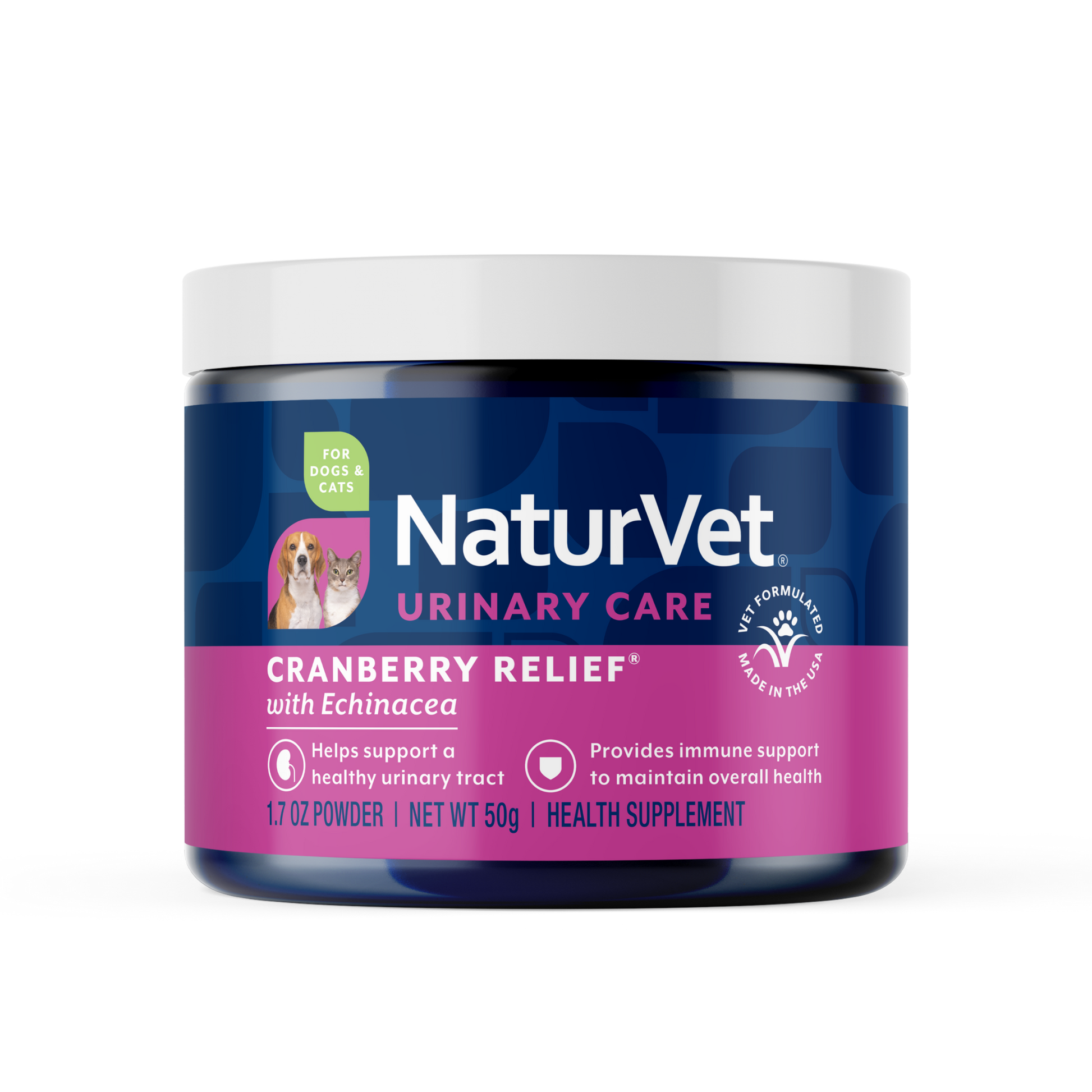

Cranberry Relief Powder Supplement for Dogs and Cats
Verified Oct 10, 2026
This is a cranberry-based powder supplement for dogs and cats designed to be added to their regular diet. It provides cranberry extract along with echinacea, vitamin C, and Oregon grape root to support urinary tract and general immune health. The formula is suitable for most pets over 6 weeks of age and can be mixed with food for easy dosing.
Jump to ingredientsAffiliate link · may earn a commission at no extra cost to you
Strong Choice
This is a targeted supplement rather than a complete diet, aimed at supporting urinary tract and immune health in dogs and cats. It combines cranberry extract with vitamin C and herbal ingredients, and is appropriate for otherwise healthy pets over 6 weeks old when used alongside a balanced main food. It’s best considered as an add-on to regular veterinary care, not a replacement for it.
Computed from 3 of 3 applicable checks. Missing data is skipped, never counted against a food.
The KibbleLab Score (1–10) is assessed from publicly available product data. Our evaluation is science-based, not marketing-based.
KibbleLab may earn an affiliate commission when you buy through a link. No one can pay for a higher score, or to change what we recommend for your pet.
At a Glance
Where these benefits come from
Benefits the manufacturer highlights in its own product marketing. KibbleLab lists them for reference and does not verify these claims.KibbleLab Review
Strengths
- Provides a defined dose of cranberry extract, which is commonly used to support urinary tract health in pets.
- Includes vitamin C and echinacea, which can offer additional antioxidant and immune support.
- Powder form makes it easy to mix into food for both dogs and cats of different sizes.
- Clear active-ingredient listing per scoop helps you and your vet tailor the dose to your pet.
Considerations
- This is a supplement only and does not provide complete and balanced nutrition, so it must be fed with a regular diet.
- Contains non-fat dry milk, so it may not suit pets with dairy allergies or sensitivities.
- Herbal ingredients like echinacea and Oregon grape root may not be appropriate for every pet, especially those with complex medical conditions.
- Any pet with recurrent urinary issues should be seen by a veterinarian; supplements alone are not enough for diagnosis or treatment.
Full Ingredient List
Ingredients and analysis reflect manufacturer data at the time of our last update and can change without notice. Always check the actual product packaging before feeding.
Ingredient filtering helps identify compatible options but is not a substitute for a veterinary elimination diet.
Top 5 Ingredients Explained
01
Cranberry
Cranberries are used in pet foods and supplements as a source of fiber and antioxidants (notably polyphenols/proanthocyanidins) and are commonly included for their potential urinary tract–supporting properties in dogs and cats. While these compounds may help inhibit bacterial adhesion in the urinary tract, scientific evidence in pets is limited, and owners should choose unsweetened, preservative-free preparations (avoiding products sweetened with xylitol), watch for gastrointestinal upset or effects on urine pH, and consult a veterinarian for pets with urinary stones or taking certain medications.
View ingredient
02
Echinacea
Echinacea is a botanical (herbal) ingredient used in pet supplements and some specialty diets as an immune-supportive additive, promoted for potential anti-inflammatory and antioxidant effects rather than as a nutrient source. Scientific evidence in dogs and cats is limited and mixed, and use carries risks such as allergic reactions, gastrointestinal upset, interactions with immunosuppressive drugs, and variable product quality, so consult your veterinarian before giving echinacea—especially for pets that are pregnant, nursing, or have autoimmune disease.
View ingredient
03
Vitamin C
Vitamin C (ascorbic acid) is used in pet foods primarily as an antioxidant and nutrient to support immune function, collagen synthesis and to help protect fats and vitamins from oxidation. Dogs and cats can normally synthesize vitamin C endogenously so dietary supplementation is usually unnecessary, though small added amounts may be beneficial during stress or illness; excessive supplemental doses can cause gastrointestinal upset and, in rare cases, contribute to oxalate stone risk in susceptible animals, so follow label directions and veterinary guidance.
04
Calcium Ascorbate
Calcium ascorbate is a buffered, calcium‑salt form of vitamin C used in pet foods primarily as an antioxidant and mild preservative and sometimes as a supplemental source of vitamin C. While dogs and cats typically synthesize their own vitamin C so routine supplementation is not required, calcium ascorbate can support antioxidant defenses, immune function and collagen formation during stress or illness, and formulators should account for the added calcium and avoid high doses that could cause gastrointestinal upset or alter urine pH.
05
Oregon Grape Root
Oregon grape root is an herbal botanical sometimes added to pet supplements and functional treats as a bitter tonic with mild antimicrobial and anti-inflammatory properties (it contains berberine), traditionally used to support digestion, liver function and skin health. It may offer supportive benefits for dogs and cats with digestive or dermatological conditions, but can cause gastrointestinal upset, interact with certain medications (including drugs metabolized by cytochrome P450 and anticoagulants) and is generally avoided in pregnant or nursing animals, so consult your veterinarian for appropriate dosing and safety.
Product Details & Brand
Product Specs
Brand

NaturVet is a leading brand of pet supplements offering a wide range of products for dogs, cats, and horses, focusing on natural health support including joint, digestive, allergy, and behavioral care. The brand targets pet owners seeking holistic, natural, and vet-formulated wellness solutions.
Manufacturer
NaturVet manufactures products in-house at its Temecula, California facility that is compliant with current Good Manufacturing Practices (cGMP). The company maintains NASC (National Animal Supplement Council) certification, ensuring standardized manufacturing, ingredient safety, and product quality.
Manufacturing details are compiled from public sources and not independently verified; they may not reflect contract manufacturing or co-packing.
Recall History
No recall is listed for NaturVet Cranberry Relief Powder Supplement for Dogs and Cats.
Source: FDA animal food recall listings back to January 2019 · Checked daily, last on Oct 16, 2026
Sign up for the full picture
Ingredient Check
We'll check every ingredient against your pet's profile.
Feeding Calculator
Personalized portion sizes based on your pet's weight, age, and activity level.
Side-by-Side Comparison
Compare this food with alternatives to find the best fit.
Similar Foods




Post your dog's report card and challenge friends to check their food.
Frequently Asked Questions
Has NaturVet ever been recalled?
We have no recalls on record for NaturVet. We track the FDA's animal food recall listings back to January 2019 and publish every pet food recall automatically. A filing that isn't pet food may not appear here.
How does KibbleLab rate foods?
Our scores are based on ingredient composition, nutritional profile, AAFCO compliance, and health considerations. We don't penalize by-products, grains, or synthetic preservatives. Brands cannot pay for higher scores.
Is KibbleLab a substitute for veterinary advice?
No. KibbleLab provides data-driven food analysis, not medical advice. Always consult your veterinarian before making dietary changes, especially for pets with health conditions.
KibbleLab provides informational content only. This is not veterinary advice. Always consult a qualified veterinarian before changing your pet's diet.
KibbleLab may earn affiliate commissions through product links. No one can pay for a higher score, or to change what we recommend for your pet.
Product data sourced from manufacturer websites, AAFCO statements, and FDA recall listings. Last verified dates reflect our most recent data check. We track the FDA's animal food recall listings back to January 2019 and publish every pet food recall automatically. A filing that isn't pet food may not appear here.

 Continue with Google
 Continue with Facebook