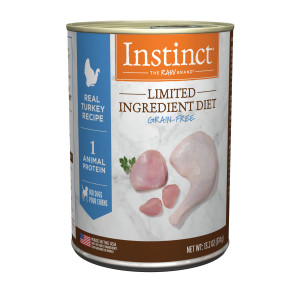
Limited Ingredient Diet Real Turkey Recipe Wet Dog Food
Verified Jun 6, 2026
This is a grain-free, limited-ingredient canned loaf diet for adult dogs, built around turkey as the single animal protein source. It uses turkey, turkey liver, and peas to provide protein, with added omega fatty acids and a full complement of vitamins and minerals for complete maintenance nutrition. It’s designed for dogs that may do better on a simpler ingredient list without common proteins like chicken or beef, or grains and potatoes.
Overall, this is a high-quality limited-ingredient wet food for adult dogs that need a simpler recipe or avoid common proteins and grains. It features turkey and turkey liver as the main animal proteins, with peas and pea protein as the plant components, and it’s formulated to meet AAFCO standards for adult maintenance. It can work very well for dogs who prefer or require wet food and whose owners are looking for a short, straightforward ingredient list.
The KibbleLab Score (1–10) is assessed from publicly available product data. Our evaluation is science-based, not marketing-based.
KibbleLab may earn an affiliate commission when you buy through a link. No one can pay for a higher score, or to change what we recommend for your pet.
At a Glance
KibbleLab Review
Strengths
- Single animal protein (turkey) plus turkey liver at the top of the ingredient list provides good-quality, easily digestible protein for most dogs.
- Limited-ingredient, grain-free formula made without chicken, beef, fish, dairy, eggs, wheat, corn, soy, or potato, which can be helpful for some dogs with food sensitivities.
- Complete and balanced for adult maintenance according to AAFCO nutrient profiles, so it can be fed as a sole diet for adult dogs.
- Wet loaf texture with high moisture (76%) supports hydration, which is especially useful for dogs that don’t drink much water on their own.
Considerations
- Peas and pea protein are significant ingredients, so this may not be ideal for owners trying to avoid legumes due to emerging concerns about legume-heavy, grain-free diets in some dogs with heart issues.
- Protein is at a moderate level for a wet food; very high-energy or working dogs might need additional calories or a higher-protein option depending on their needs.
- Contains turkey and turkey liver, so it is not suitable for dogs with poultry allergies.
Full Ingredient List
Ingredients and analysis reflect manufacturer data at the time of our last update and can change without notice. Always check the actual product packaging before feeding.
Ingredient filtering helps identify compatible options but is not a substitute for a veterinary elimination diet.
Top 5 Ingredients Explained
01
Turkey
Turkey is commonly used as a primary animal protein in dog and cat foods, offering highly digestible, high‑quality protein and supplying essential amino acids along with B vitamins, phosphorus and zinc to support muscle maintenance and metabolism. Its fat level varies by cut so products can be lean or richer; some pets may develop allergies to poultry, cooked bones are hazardous, raw meat carries bacterial risk, and owners should rely on balanced commercial formulations (and ensure adequate taurine for cats) if turkey is a main ingredient.
02
Turkey Broth
Turkey broth is commonly used in pet foods and toppers as a flavoring and moisture enhancer to improve palatability, and in wet formulas it contributes small amounts of protein, amino acids and electrolytes. It can help entice dogs and cats to eat or increase hydration, but caregivers should check sodium levels and avoid broths with onion, garlic, xylitol or other harmful additives, and be mindful if the pet has a poultry allergy.
03
Turkey Liver
Turkey liver is an organ meat commonly used in dog and cat foods as a protein-rich, palatability-enhancing ingredient and a concentrated source of vitamins and minerals—particularly vitamin A, B vitamins (including B12), iron, and copper. It offers nutritional benefits for metabolism and skin/coat health but should be included in moderation within a balanced diet to avoid vitamin A excess and high purine intake, and must be properly handled or cooked to reduce foodborne risks.
04
Pea
Pea is a plant-based ingredient used in pet foods as a source of protein, soluble and insoluble fiber, and micronutrients (often included as whole peas, pea flour, or pea protein concentrate) to boost protein content and improve texture. While peas can provide digestible carbohydrates, fiber, and some plant protein useful especially for dogs, they are not a complete protein for obligate carnivores like cats and — when overused, particularly in concentrated forms or as a major component of grain‑free diets — have been scrutinized for a possible association with canine dilated cardiomyopathy and can contribute to nutrient imbalances or excess calories, so balanced formulation and compliance with AAFCO nutritional profiles are important.
05
Pea Protein
Pea protein is a concentrated plant-based protein and functional ingredient in pet foods used to raise protein levels, improve texture and contribute soluble fiber, vitamins and minerals. It can be a useful, digestible protein source for dogs and a supplemental protein in some cat formulas, but because it is lower in certain essential amino acids (and cats are obligate carnivores), diets relying heavily on pea protein should be formulated to meet AAFCO nutrient profiles and owners should note potential legume sensitivities and the debated link between high‑pulse, grain‑free diets and canine heart concerns.
Nutritional Breakdown
How to read As Fed versus Dry Matter
As fed shows the numbers straight off the label, water included. Dry matter removes the water so you can compare a wet food and a dry food fairly.What is calorie density
How many calories the food packs per unit. Denser foods mean smaller portions for the same calories.Product Details & Brand
Product Specs
AAFCO Nutritional Adequacy
What is AAFCO
Association of American Feed Control Officials. It sets the nutritional
adequacy standards US pet foods are measured against.
What is AAFCO
Association of American Feed Control Officials. It sets the nutritional adequacy standards US pet foods are measured against.Brand

Instinct is Nature’s Variety’s flagship brand dedicated to raw and minimally processed pet nutrition. It positions itself in the premium and super-premium segment, focusing on high-protein, grain-free, and raw-inspired diets. Instinct offers frozen raw, freeze-dried raw, kibble with raw coatings, and canned foods aimed at health-conscious pet owners who value a biologically appropriate diet.
Visit InstinctManufacturer
Nature's Variety manages manufacturing quality and safety in accordance with FDA and AAFCO guidelines. Their manufacturing facilities adhere to stringent quality control protocols and HACCP food safety programs to ensure the integrity of their frozen and freeze-dried raw products.
Manufacturing details are compiled from public sources and not independently verified; they may not reflect contract manufacturing or co-packing.
Recall History
Instinct Limited Ingredient Diet Real Turkey Recipe Wet Dog Food has no recalls since 2014.
Source: FDA Pet Food Recall Database · Monitored daily
Sign up for the full picture
Feeding Calculator
Personalized portion sizes based on your pet's weight, age, and activity level.
Get started
Post your dog's report card and challenge friends to check their food.
Frequently Asked Questions
Has Instinct ever been recalled?
We have no recalls on record for Instinct. We monitor the FDA Pet Food Recall Database daily.
How does KibbleLab rate foods?
Our scores are based on ingredient composition, nutritional profile, AAFCO compliance, and health considerations. We don't penalize by-products, grains, or synthetic preservatives. Brands cannot pay for higher scores.
Is KibbleLab a substitute for veterinary advice?
No. KibbleLab provides data-driven food analysis, not medical advice. Always consult your veterinarian before making dietary changes, especially for pets with health conditions.
KibbleLab provides informational content only. This is not veterinary advice. Always consult a qualified veterinarian before changing your pet's diet.
KibbleLab may earn affiliate commissions through product links. No one can pay for a higher score, or to change what we recommend for your pet.
Product data sourced from manufacturer websites, AAFCO statements, and FDA recall database. Last verified dates reflect our most recent data check.

 Continue with Google
 Continue with Facebook