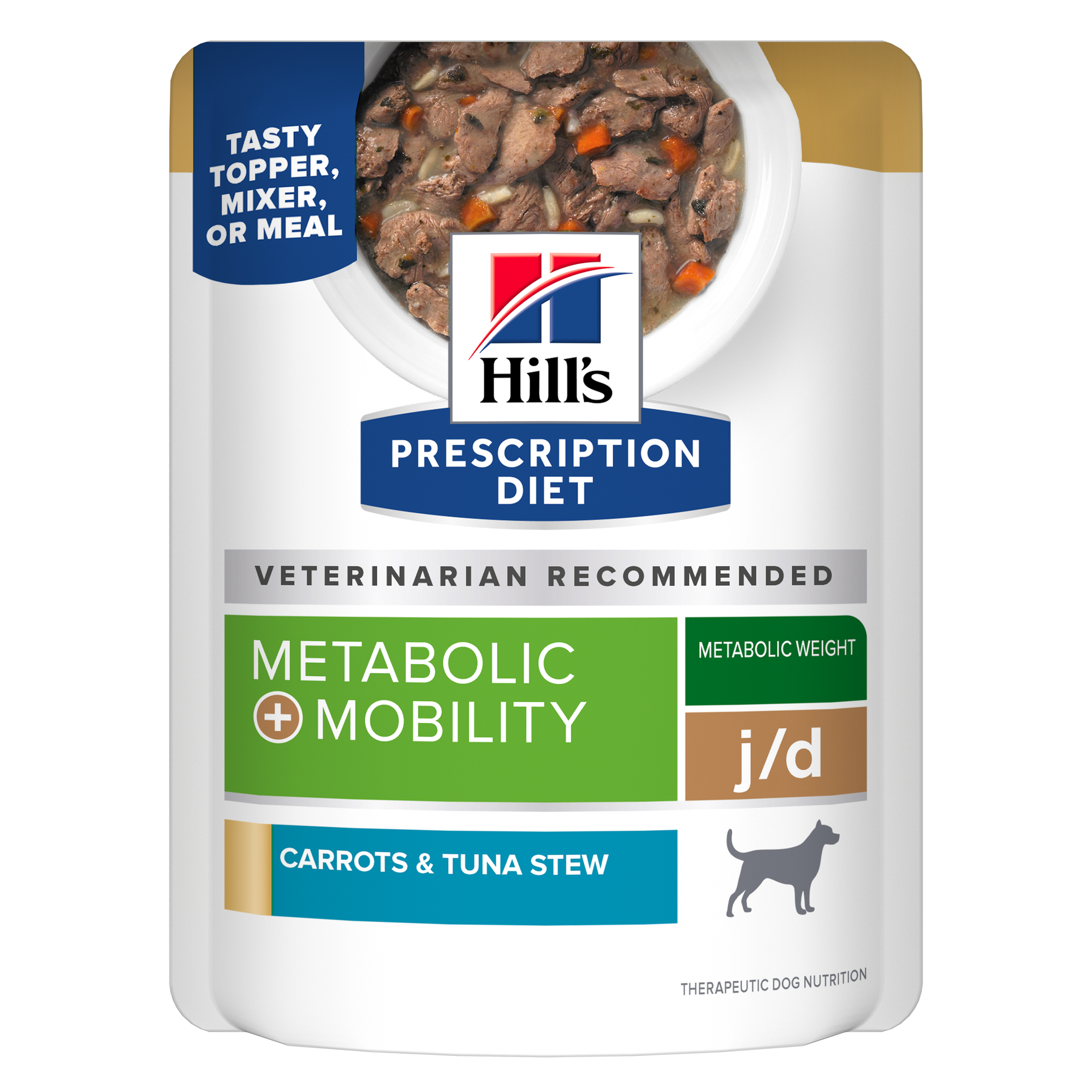
Metabolic Weight + J/D Carrots & Tuna Stew Wet Dog Food
Verified Jun 15, 2026
This is a therapeutic wet food for adult dogs that combines weight management support with joint and mobility support. It uses pork liver and tuna as key animal protein sources, along with added fiber and controlled fat to help manage weight, plus fish oil, glucosamine, and chondroitin to support joint health. The formula is complete and balanced for adult maintenance and has been validated through AAFCO feeding trials.
Nutritionally, this is a well-designed prescription wet diet for adult dogs needing both weight control and joint support. The moderate protein, relatively low fat, and high fiber profile fit a weight-management strategy, while fish oil, glucosamine, and chondroitin offer targeted support for mobility. Because it’s a prescription product with feeding-trial backing, it’s best suited for dogs under veterinary supervision who need help with weight and joint issues rather than for healthy dogs at ideal weight.
The KibbleLab Score (1–10) is assessed from publicly available product data. Our evaluation is science-based, not marketing-based.
KibbleLab may earn an affiliate commission when you buy through a link. No one can pay for a higher score, or to change what we recommend for your pet.
At a Glance
KibbleLab Review
Strengths
- Backed by AAFCO feeding trials for complete and balanced nutrition for adult maintenance, which gives extra confidence in digestibility and nutrient adequacy.
- Formulated for weight management with moderate protein (about 28% on a dry-matter basis), relatively low fat, and high fiber (about 16% DM), which can help dogs feel fuller on fewer calories.
- Includes fish oil plus added glucosamine and chondroitin sulfate, which are commonly used to support joint cartilage and mobility in dogs with joint concerns.
- Lower phosphorus and sodium levels compared with many standard diets, which can be helpful for some dogs that also need kidney-friendly features as part of their overall management plan.
Considerations
- Contains several common protein allergens (pork liver, tuna/fish oil, egg, chicken-derived flavors, wheat gluten), so it is not appropriate for dogs with known food allergies to these ingredients.
- High-fiber, reduced-calorie diets can be very helpful for weight loss but may not suit underweight dogs or those with very high energy needs unless carefully managed by a veterinarian.
- As a prescription therapeutic diet, it is intended for specific medical and nutritional needs and should be used under veterinary guidance rather than as a general everyday choice for all dogs.
Full Ingredient List
Ingredients and analysis reflect manufacturer data at the time of our last update and can change without notice. Always check the actual product packaging before feeding.
Ingredient filtering helps identify compatible options but is not a substitute for a veterinary elimination diet.
Top 5 Ingredients Explained
01
Water
Water is an essential nutrient and the primary solvent and moisture component in pet foods, especially wet and canned diets, and is also used in processing and to adjust texture and palatability. It is vital for digestion, nutrient transport, temperature regulation and waste removal in dogs and cats; pets must have constant access to clean water as dehydration can quickly lead to serious health issues and requirements increase with activity, heat, or illness, while moisture in wet food can help meet part of their daily needs.
02
Pork Liver
Pork liver is an organ meat used in pet foods as a nutrient‑dense source of high‑quality protein and concentrated vitamins and minerals—notably vitamin A, B vitamins (including B12 and folate), iron and copper—that support red blood cell production, skin/coat condition and overall metabolism. Because liver is very rich in vitamin A and certain minerals, it should be included in limited amounts to avoid hypervitaminosis A or mineral imbalances and must be properly processed to reduce pathogen risk; pets with urinary stone issues or a pork sensitivity should use caution.
03
Carrot
Carrot is used in pet foods as a vegetable ingredient providing fiber, moisture, texture and antioxidant nutrients such as beta‑carotene (a provitamin A), vitamin K, vitamin C and potassium, contributing to palatability and digestive bulk. Cooked carrots are more digestible and release more beta‑carotene, but cats cannot efficiently convert beta‑carotene to active vitamin A so carrots are more nutritionally useful for dogs than as a primary vitamin A source for cats; they should be fed in moderation due to natural sugars and should be offered in appropriately sized pieces to avoid choking.
04
Cellulose Powder
Cellulose powder is an insoluble, plant-derived fiber commonly used in pet foods as a bulking agent, binder and calorie-diluting texturizer to help control weight and improve stool formation; it is not digestible by dogs or cats and contributes negligible energy or vitamins. While it can aid stool consistency and manufacturing performance, cellulose is non‑fermentable so offers little prebiotic benefit, and high inclusions can reduce palatability or displace nutrients—formulations, especially for cats with lower fiber tolerance, should be balanced accordingly.
05
Spinach
Spinach is used in pet foods as a leafy vegetable to provide fiber, moisture, and micronutrients such as vitamins A, C and K, folate, iron and antioxidant compounds, but it is not a primary protein source. While it can add low‑calorie nutrients and antioxidants to a dog or cat’s diet, spinach is high in oxalates (and can contain nitrates) which in large amounts may reduce mineral absorption or contribute to urinary/kidney issues in susceptible animals, so it should be fed in moderation and pets with specific health concerns should consult their veterinarian.
Nutritional Breakdown
How to read As Fed versus Dry Matter
As fed shows the numbers straight off the label, water included. Dry matter removes the water so you can compare a wet food and a dry food fairly.What is calorie density
How many calories the food packs per unit. Denser foods mean smaller portions for the same calories.Product Details & Brand
Product Specs
AAFCO Nutritional Adequacy
What is AAFCO
Association of American Feed Control Officials. It sets the nutritional
adequacy standards US pet foods are measured against.
What is AAFCO
Association of American Feed Control Officials. It sets the nutritional adequacy standards US pet foods are measured against.Brand

Hill's Prescription Diet offers clinically formulated therapeutic nutrition designed to help manage specific health conditions in pets such as kidney disease, urinary issues, skin sensitivities, digestive problems, and weight management. Sold primarily through veterinarians, it's backed by research from Hill's Pet Nutrition Center and veterinary nutritionists.
Visit Hill's Prescription DietWSAVA publishes criteria for evaluating a manufacturer (qualified nutritionists, feeding trials, published research); it does not certify or endorse brands.
Manufacturer
Hill's Pet Nutrition maintains strict quality and safety standards in all of its manufacturing sites, with adherence to rigorous ingredient testing and safety validation procedures. Facilities follow current Good Manufacturing Practices (cGMPs) and are regularly audited for quality, safety, and consistency. All products meet or exceed AAFCO and FDA regulatory standards for pet food.
Manufacturing details are compiled from public sources and not independently verified; they may not reflect contract manufacturing or co-packing.
Recall History
Hill's Prescription Diet Metabolic Weight + J/D Carrots & Tuna Stew Wet Dog Food has no recalls since 2014.
Source: FDA Pet Food Recall Database · Monitored daily
Sign up for the full picture
Feeding Calculator
Personalized portion sizes based on your pet's weight, age, and activity level.
Get startedSimilar Foods
Post your dog's report card and challenge friends to check their food.
Frequently Asked Questions
Has Hill's Prescription Diet ever been recalled?
We have no recalls on record for Hill's Prescription Diet. We monitor the FDA Pet Food Recall Database daily.
How does KibbleLab rate foods?
Our scores are based on ingredient composition, nutritional profile, AAFCO compliance, and health considerations. We don't penalize by-products, grains, or synthetic preservatives. Brands cannot pay for higher scores.
Is KibbleLab a substitute for veterinary advice?
No. KibbleLab provides data-driven food analysis, not medical advice. Always consult your veterinarian before making dietary changes, especially for pets with health conditions.
KibbleLab provides informational content only. This is not veterinary advice. Always consult a qualified veterinarian before changing your pet's diet.
KibbleLab may earn affiliate commissions through product links. No one can pay for a higher score, or to change what we recommend for your pet.
Product data sourced from manufacturer websites, AAFCO statements, and FDA recall database. Last verified dates reflect our most recent data check.

 Continue with Google
 Continue with Facebook