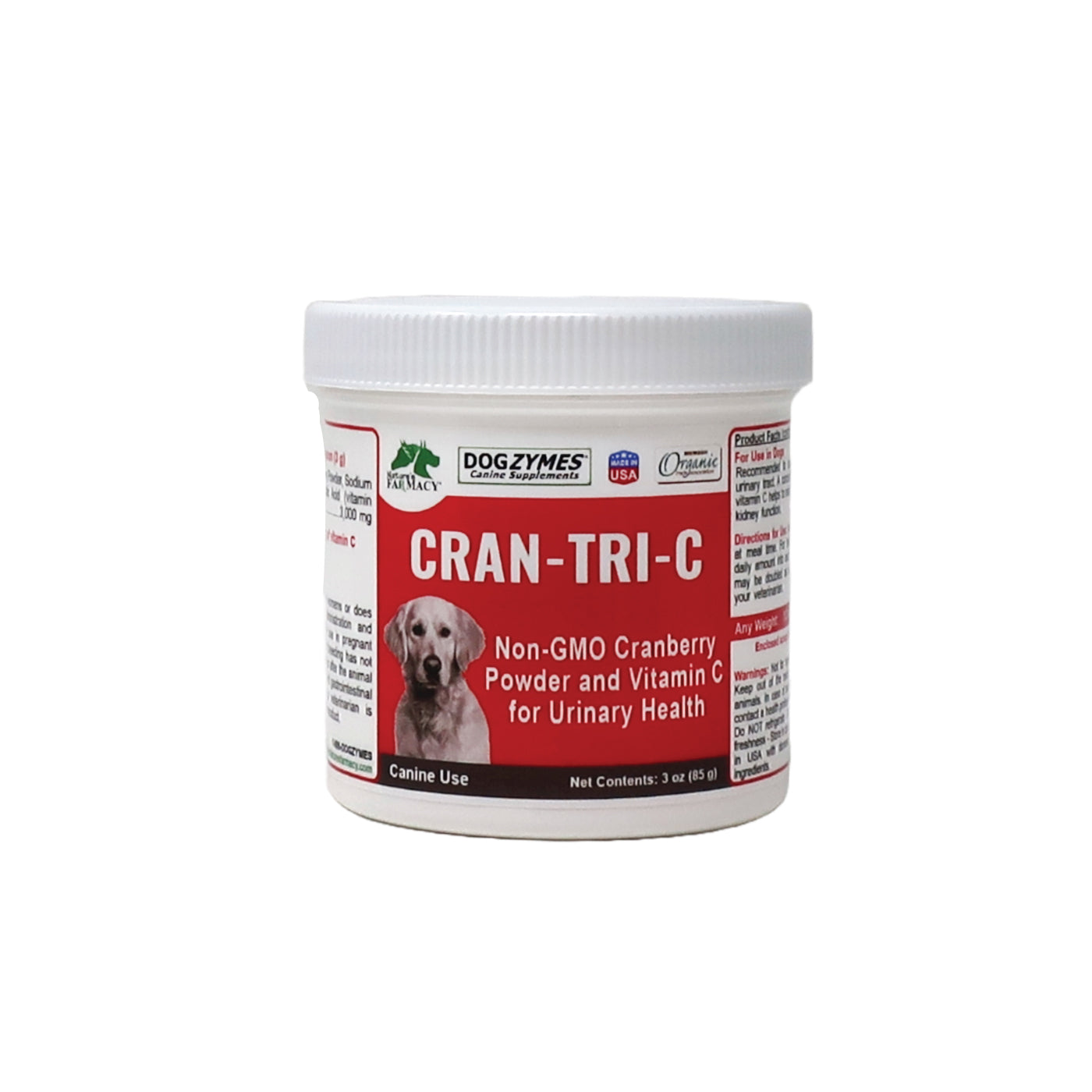

Dogzymes Cran-Tri-C Supplement Powder
Verified Aug 28, 2026
This is a cranberry and vitamin C powder supplement for dogs, including puppies, aimed at supporting urinary tract health and connective tissues. It combines non-GMO whole cranberry powder with two supplemental sources of vitamin C, making it easy to mix into your dog’s regular food. It’s meant to be used alongside a complete and balanced diet, not as a primary food source.
Jump to ingredientsAffiliate link · may earn a commission at no extra cost to you
Strong Choice
This cranberry and vitamin C supplement is designed for dogs of all ages, including growing puppies, who may benefit from extra urinary tract or connective tissue support. It offers a concentrated dose of vitamin C from multiple sources plus whole cranberry in a simple powder form. It’s best used as an add-on to a complete, balanced dog food under guidance from your veterinarian, especially if your dog has existing urinary issues.
Computed from 3 of 3 applicable checks. Missing data is skipped, never counted against a food.
The KibbleLab Score (1–10) is assessed from publicly available product data. Our evaluation is science-based, not marketing-based.
KibbleLab may earn an affiliate commission when you buy through a link. No one can pay for a higher score, or to change what we recommend for your pet.
At a Glance
Where these benefits come from
Benefits the manufacturer highlights in its own product marketing. KibbleLab lists them for reference and does not verify these claims.KibbleLab Review
Strengths
- Provides vitamin C from three sources, including whole cranberry powder, which can support antioxidant intake.
- Powder form makes it easy to mix with most foods, which can help with consistent daily dosing.
- Non-GMO whole cranberry powder offers phytonutrients with naturally low sugar content.
Considerations
- This is a supplement, not a complete diet, so it must be fed alongside a balanced dog food.
- High-dose vitamin C is not necessary for all dogs, so it’s wise to check with your vet before adding it, especially for dogs with medical conditions.
- Dogs with known sensitivity to cranberry or acidic ingredients may not tolerate this product well.
Full Ingredient List
Ingredients and analysis reflect manufacturer data at the time of our last update and can change without notice. Always check the actual product packaging before feeding.
Ingredient filtering helps identify compatible options but is not a substitute for a veterinary elimination diet.
Top 5 Ingredients Explained
01
Cranberry
Cranberries are used in pet foods and supplements as a source of fiber and antioxidants (notably polyphenols/proanthocyanidins) and are commonly included for their potential urinary tract–supporting properties in dogs and cats. While these compounds may help inhibit bacterial adhesion in the urinary tract, scientific evidence in pets is limited, and owners should choose unsweetened, preservative-free preparations (avoiding products sweetened with xylitol), watch for gastrointestinal upset or effects on urine pH, and consult a veterinarian for pets with urinary stones or taking certain medications.
View ingredient
02
Sodium Ascorbate
Sodium ascorbate is the sodium salt of vitamin C often used in pet foods as a stable, water‑soluble antioxidant and as a preserved source of ascorbate to protect fats and vitamins from oxidation. Because dogs and cats generally synthesize vitamin C endogenously, routine supplementation is usually unnecessary, but sodium ascorbate can be used for product stability or specific needs; high doses may cause gastrointestinal upset and the extra sodium should be considered for pets on sodium‑restricted diets.
03
Ascorbic Acid
Ascorbic acid is the chemical form of vitamin C commonly used in pet foods as an antioxidant and preservative to protect fats, flavors, and other vitamins from oxidation and sometimes included as a supplemental source of vitamin C. Dogs and cats generally synthesize vitamin C endogenously so it is not essential in most diets, but added ascorbic acid can support immune function and wound healing and help stabilize the product; large supplemental doses can cause gastrointestinal upset or increase urinary oxalate in susceptible animals, so extra supplementation should be guided by a veterinarian.
04
Other Vitamin
“Other Vitamin” typically denotes one or more vitamins added as part of a vitamin premix to provide essential micronutrients that support metabolism, immune function, skin and coat condition, vision and bone health in dogs and cats. While vitamins are necessary at species‑specific levels (for example, cats require preformed vitamin A), excessive supplementation—especially of fat‑soluble vitamins like A and D—can be harmful, so trusted pet foods follow AAFCO/NRC guidelines and should ideally list specific vitamins and amounts.
Product Details & Brand
Product Specs
Brand

Nature's Farmacy is the flagship brand offering animal health supplements, probiotics, digestive enzymes, and nutritional support products. It focuses on holistic, natural wellness solutions for pets and performance animals, targeting consumers seeking science-based yet natural options for animal health.
Manufacturer
Products are manufactured in the USA under strict in-house quality control procedures. The company oversees its production to ensure consistency, purity, and efficacy of supplements, adhering to standard GMP (Good Manufacturing Practices) for animal supplements.
Manufacturing details are compiled from public sources and not independently verified; they may not reflect contract manufacturing or co-packing.
Recall History
No recall is listed for Nature's Farmacy Dogzymes Cran-Tri-C Supplement Powder.
Source: FDA animal food recall listings back to January 2019 · Checked daily, last on Oct 16, 2026
Sign up for the full picture
Ingredient Check
We'll check every ingredient against your pet's profile.
Feeding Calculator
Personalized portion sizes based on your pet's weight, age, and activity level.
Side-by-Side Comparison
Compare this food with alternatives to find the best fit.
Similar Foods



Post your dog's report card and challenge friends to check their food.
Frequently Asked Questions
Has Nature's Farmacy ever been recalled?
We have no recalls on record for Nature's Farmacy. We track the FDA's animal food recall listings back to January 2019 and publish every pet food recall automatically. A filing that isn't pet food may not appear here.
How does KibbleLab rate foods?
Our scores are based on ingredient composition, nutritional profile, AAFCO compliance, and health considerations. We don't penalize by-products, grains, or synthetic preservatives. Brands cannot pay for higher scores.
Is KibbleLab a substitute for veterinary advice?
No. KibbleLab provides data-driven food analysis, not medical advice. Always consult your veterinarian before making dietary changes, especially for pets with health conditions.
KibbleLab provides informational content only. This is not veterinary advice. Always consult a qualified veterinarian before changing your pet's diet.
KibbleLab may earn affiliate commissions through product links. No one can pay for a higher score, or to change what we recommend for your pet.
Product data sourced from manufacturer websites, AAFCO statements, and FDA recall listings. Last verified dates reflect our most recent data check. We track the FDA's animal food recall listings back to January 2019 and publish every pet food recall automatically. A filing that isn't pet food may not appear here.

 Continue with Google
 Continue with Facebook