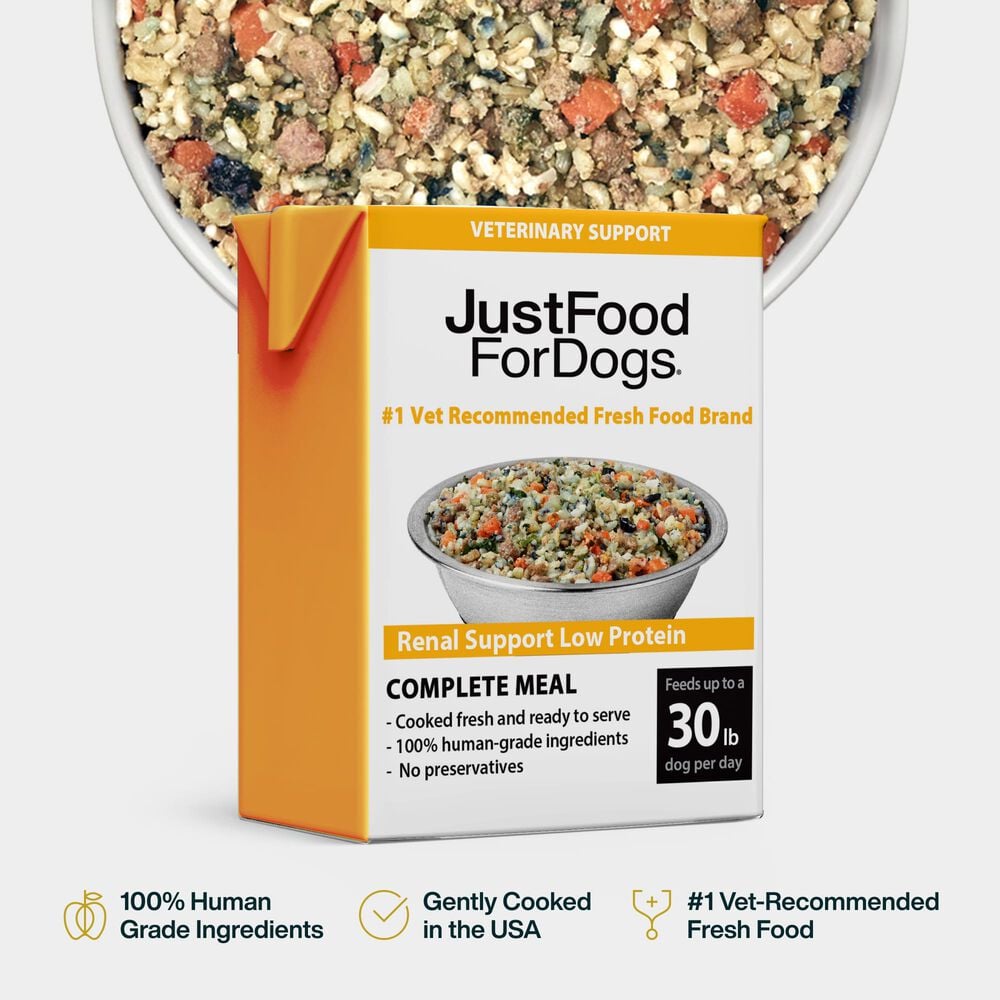
Pantry Fresh Renal Support Low Protein Wet Dog Food
Verified Jul 25, 2026
This is a low‑protein, complete wet diet designed for dogs with kidney or liver concerns, to be used under veterinary supervision. It uses ground lamb and lamb liver as the main animal proteins, with white and brown rice plus vegetables like cauliflower, carrots, and spinach for energy and fiber. The recipe features tightly controlled phosphorus and added omega‑3s and B vitamins to help support dogs who need a renal‑friendly formula.
Jump to ingredientsA thoughtfully formulated therapeutic wet food for dogs needing a controlled‑protein, low‑phosphorus diet, such as many dogs with chronic kidney or certain liver issues. It offers moderate protein from lamb, higher moisture, and carefully balanced minerals while still being complete and balanced to AAFCO standards. It is best used under close guidance from your veterinarian, as intended by the manufacturer.
The KibbleLab Score (1–10) is assessed from publicly available product data. Our evaluation is science-based, not marketing-based.
KibbleLab may earn an affiliate commission when you buy through a link. No one can pay for a higher score, or to change what we recommend for your pet.
At a Glance
KibbleLab Review
Strengths
- Formulated specifically with low protein and tightly controlled phosphorus levels to support dogs with kidney or some liver issues.
- Uses lamb and lamb liver as identifiable animal protein sources, which can help with palatability and amino acid quality.
- Complete and balanced to AAFCO standards for all life stages, which is not always the case for renal support diets.
- High moisture canned-style food, which can help support overall hydration in dogs that will eat it well.
Considerations
- This is intended for intermittent or supplemental feeding under veterinary supervision, so it is not a general everyday food for healthy dogs.
- Lamb is a common animal protein, so dogs with lamb allergies will need a different renal-support option.
- Protein level is intentionally low, which may not be appropriate for dogs that do not truly need protein restriction.
Full Ingredient List
Ingredients and analysis reflect manufacturer data at the time of our last update and can change without notice. Always check the actual product packaging before feeding.
Ingredient filtering helps identify compatible options but is not a substitute for a veterinary elimination diet.
Top 5 Ingredients Explained
01
Lamb
Lamb is commonly used in dog and cat foods as a high-quality animal protein that supplies essential amino acids, iron and B vitamins and is often chosen for its palatability or as a “novel” protein in elimination diets. It can be higher in fat and calories than some other meats and may still cause allergic reactions in sensitive animals, so owners of overweight pets or those with food sensitivities should consult a veterinarian and use proper handling/cooking practices if feeding raw or homemade lamb.
View ingredient
02
Long Grain White Rice
Long grain white rice is a highly digestible carbohydrate commonly used in pet foods and home-cooked recipes as an energy source, binder or mild filler that is often included in bland diets for gastrointestinal upset. It supplies readily available calories but is low in protein, fat and micronutrients so diets must be balanced with other ingredients; it has a relatively high glycemic index (a consideration for overweight or diabetic pets) and should be used in moderation due to occasional concerns about inorganic arsenic accumulation.
03
Cauliflower
Cauliflower is used in pet foods as a low‑calorie vegetable ingredient that provides soluble and insoluble fiber, vitamins (notably C and K) and phytonutrients, contributing bulk, moisture and texture for weight management and digestive health while supplying little protein or fat. It should be fed in moderation—especially to cats, which require meat‑based nutrition—because large amounts can cause gas or gastrointestinal upset and cruciferous vegetables contain goitrogenic compounds that could affect thyroid function; cooking or finely chopping reduces choking risk and may improve digestibility.
View ingredient
04
Carrot
Carrot is used in pet foods as a vegetable ingredient providing fiber, moisture, texture and antioxidant nutrients such as beta‑carotene (a provitamin A), vitamin K, vitamin C and potassium, contributing to palatability and digestive bulk. Cooked carrots are more digestible and release more beta‑carotene, but cats cannot efficiently convert beta‑carotene to active vitamin A so carrots are more nutritionally useful for dogs than as a primary vitamin A source for cats; they should be fed in moderation due to natural sugars and should be offered in appropriately sized pieces to avoid choking.
View ingredient
05
Brown Rice
Brown rice is a whole-grain carbohydrate and fiber ingredient commonly used in dog and cat foods to provide digestible energy, dietary fiber, and modest amounts of B‑vitamins and minerals; it typically offers more nutrients and fiber than white rice. It’s generally well tolerated and can help with sensitive stomachs, but because it is high in carbohydrates (not a primary protein source) and can contain trace inorganic arsenic depending on sourcing, it should be included in balanced formulations and monitored in overweight or diabetic pets.
Nutritional Breakdown
How to read As Fed versus Dry Matter
As fed shows the numbers straight off the label, water included. Dry matter removes the water so you can compare a wet food and a dry food fairly.What is calorie density
How many calories the food packs per unit. Denser foods mean smaller portions for the same calories.Product Details & Brand
Product Specs
AAFCO Nutritional Adequacy
What is AAFCO
Association of American Feed Control Officials. It sets the nutritional
adequacy standards US pet foods are measured against.
What is AAFCO
Association of American Feed Control Officials. It sets the nutritional adequacy standards US pet foods are measured against.Brand

JustFoodForDogs is a premium pet food brand offering freshly prepared, human-grade meals for dogs. The brand emphasizes transparency, nutrition backed by veterinary science, and meals cooked in open kitchens. It caters to discerning pet owners seeking balanced, minimally processed nutrition formulated by veterinary professionals.
Manufacturer
JustFoodForDogs operates open-to-the-public kitchens and facilities where all meals are prepared in accordance with USDA standards for human food. The company adheres to rigorous quality control, using independent laboratory testing for nutrient analysis and safety. Their veterinary team formulates diets based on AAFCO nutrient guidelines and conducts feeding trials.
Manufacturing details are compiled from public sources and not independently verified; they may not reflect contract manufacturing or co-packing.
Recall History
JustFoodForDogs Pantry Fresh Renal Support Low Protein Wet Dog Food has no recalls since 2014.
Source: FDA Pet Food Recall Database · Monitored daily
Sign up for the full picture
Ingredient Check
We'll check every ingredient against your pet's profile.
Feeding Calculator
Personalized portion sizes based on your pet's weight, age, and activity level.
Side-by-Side Comparison
Compare this food with alternatives to find the best fit.
Similar Foods





Post your dog's report card and challenge friends to check their food.
Frequently Asked Questions
Has JustFoodForDogs ever been recalled?
We have no recalls on record for JustFoodForDogs. We monitor the FDA Pet Food Recall Database daily.
How does KibbleLab rate foods?
Our scores are based on ingredient composition, nutritional profile, AAFCO compliance, and health considerations. We don't penalize by-products, grains, or synthetic preservatives. Brands cannot pay for higher scores.
Is KibbleLab a substitute for veterinary advice?
No. KibbleLab provides data-driven food analysis, not medical advice. Always consult your veterinarian before making dietary changes, especially for pets with health conditions.
KibbleLab provides informational content only. This is not veterinary advice. Always consult a qualified veterinarian before changing your pet's diet.
KibbleLab may earn affiliate commissions through product links. No one can pay for a higher score, or to change what we recommend for your pet.
Product data sourced from manufacturer websites, AAFCO statements, and FDA recall database. Last verified dates reflect our most recent data check.

 Continue with Google
 Continue with Facebook