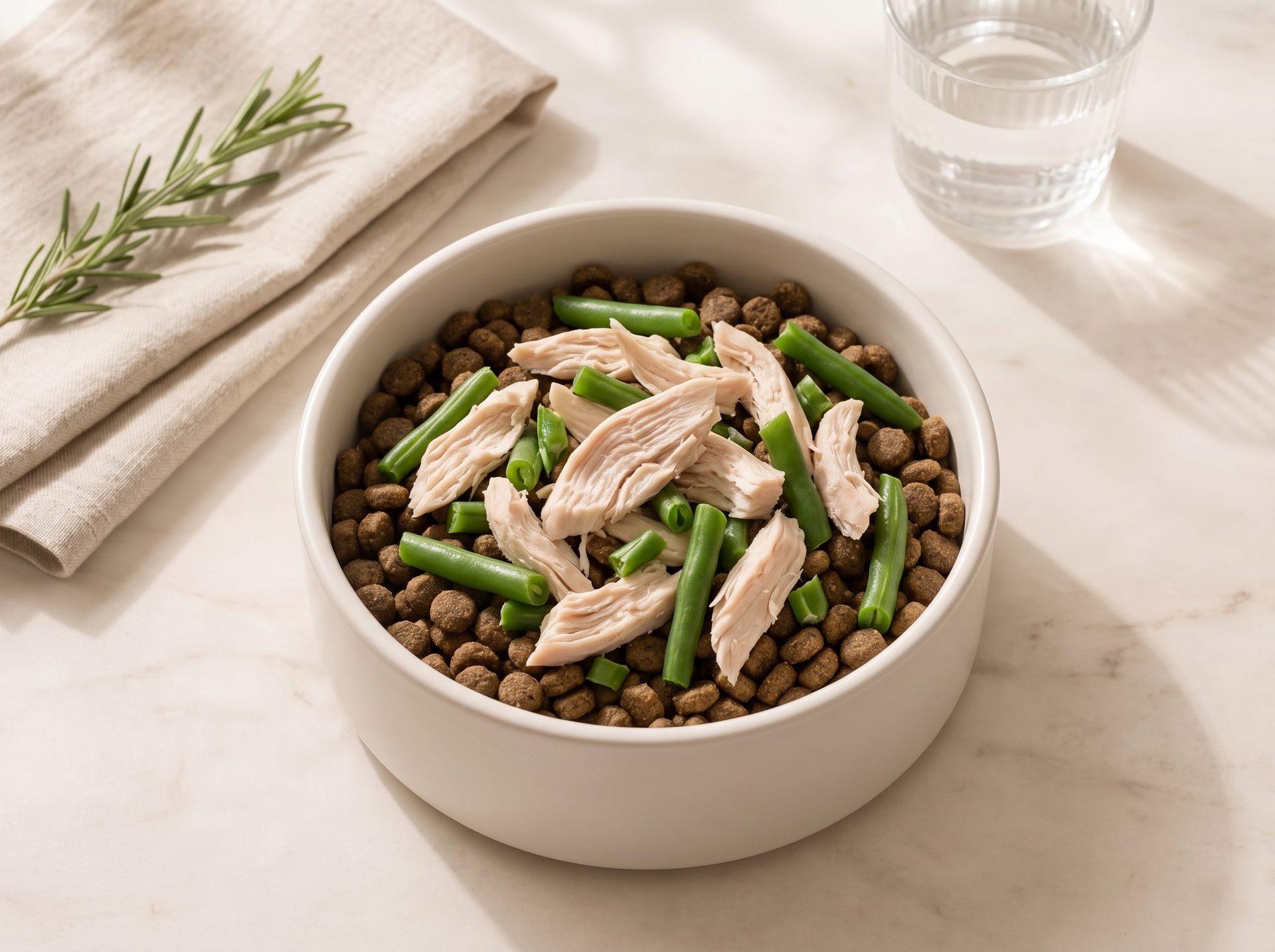
The short answer
Healthy digestion shows up in simple ways: formed, consistent stool, comfortable bathroom habits, steady appetite, and stable weight. The food properties that support that, fiber, moisture, and digestibility, exist in both wet and dry formats. Neither format is uniquely "good for digestion."
Where they differ is in emphasis. Dry foods are an easy place to build in specific fiber blends and prebiotics; wet foods lead on moisture. Here is how to think about each.
The three levers of digestive health
- Fiber: the right amount and type helps regulate the gut. Soluble fiber (from sources like beet pulp) feeds beneficial bacteria and firms loose stool; insoluble fiber adds bulk and keeps things moving. Too little or too much can both cause problems.
- Moisture: water keeps the digestive tract working smoothly and matters for pets prone to constipation. Wet food contributes a large share of daily water intake.
- Digestibility: highly digestible ingredients are absorbed well, leaving less waste to ferment. That generally means smaller, firmer stools and less gas.
Stool quality is the most useful at-home signal of how well a food is being digested. Firm but not hard, consistent day to day, and a normal volume are what you want. Persistent loose stool, straining, or a jump in volume are worth a conversation with your vet.
Wet food and digestion
Where it helps
- Hydration: the high water content supports gut transit and is helpful for pets prone to constipation, and for cats generally.
- Gentle and palatable: easy to eat and often built on simple, digestible recipes.
What to watch
- Fiber is not always emphasized: some wet foods are lower in the specific fibers that firm up stool. Formulas vary, so check the recipe.
Dry food and digestion
Where it helps
- Targeted fiber and prebiotics: many kibbles are formulated with defined fiber blends and prebiotics like chicory root to support the gut microbiome.
- Consistency: a steady recipe helps keep digestion predictable.
What to watch
- Lower moisture: pair with good water access, and consider adding some wet food for pets that run dry or constipated.

Mixing formats can cover both bases. A fiber-supported kibble plus a portion of wet food gives you defined fiber and prebiotics alongside real moisture. For many pets that is a practical way to support digestion without picking a side.
Common mistakes
- Adding fiber blindly. More fiber is not always better. The type and amount should fit the problem; ask your vet before topping food with pumpkin, psyllium, or supplements long term.
- Changing foods too quickly. Abrupt switches disrupt the gut and its bacteria. Transition over 7 to 10 days. See how to switch foods without stomach upset.
- Overfeeding. Large meals and free-feeding can loosen stool and mask what a food is really doing. Measured portions make digestion easier to read.
- Ignoring water on a dry diet. Kibble-fed pets, cats especially, need easy access to fresh water; some benefit from added wet food for moisture.
- Treating every loose stool as a food problem. Parasites, infections, and other medical issues cause digestive signs too.
Questions to ask your veterinarian
- Does my pet need more fiber, less, or a different type?
- Would a high-moisture diet or added wet food help with constipation or transit?
- Is a gastrointestinal or highly digestible diet worth trying for ongoing soft stool?
- What stool changes should prompt a visit rather than a diet tweak?
A pet that is reactive or easily upset rather than simply needing digestive support may be better served by the guidance in wet vs dry for a sensitive stomach. Seek help promptly for persistent diarrhea or constipation, straining, blood, vomiting, or weight loss.
Digestive health runs on fiber, moisture, and digestibility, and both formats can deliver them. Dry food is a natural home for targeted fiber and prebiotics; wet food leads on the moisture side. Watch stool quality as your main signal, transition slowly, keep portions measured, and bring persistent changes to your veterinarian.
Sources & Further Reading
- WSAVA Global Nutrition Committee. Global Nutrition Guidelines.
- Merck Veterinary Manual. "Nutrition: Small Animals" and "The Digestive System of Small Animals."
Common questions
Is wet or dry food better for digestion?
Both can support good digestion. Dry foods are an easy place to build in targeted fiber and prebiotics; wet foods lead on moisture, which helps transit and pets prone to constipation. The best choice depends on your pet, and a measured mix of both covers both bases for many animals.
Does wet or dry food make firmer stool?
Stool firmness depends more on fiber and digestibility than on format. A food with the right soluble fiber and highly digestible ingredients tends to produce firmer, more consistent stool whether it is wet or dry. Persistent loose stool is worth a vet visit.
Does dry food cause constipation?
Dry food itself does not cause constipation, but its low moisture means water access matters. Pets that run dry, or cats especially, may benefit from added wet food or a high-moisture diet to support transit.
What mistakes hurt my pet's digestion?
Switching foods too fast, adding fiber supplements without guidance, overfeeding or free-feeding, neglecting water on a kibble diet, and assuming every loose stool is dietary when it can be medical.
When should digestive problems go to the vet?
Promptly for persistent diarrhea or constipation, straining, blood, vomiting, lethargy, or weight loss. Diet adjustments are appropriate only for mild, occasional changes in an otherwise well pet.
Based on published veterinary nutrition research (WSAVA, Merck Veterinary Manual).
KibbleLab Explains articles are educational, and are not veterinary advice. Before starting an elimination diet, a weight plan, or any major diet change, talk to your veterinarian.

 Continue with Google
 Continue with Facebook