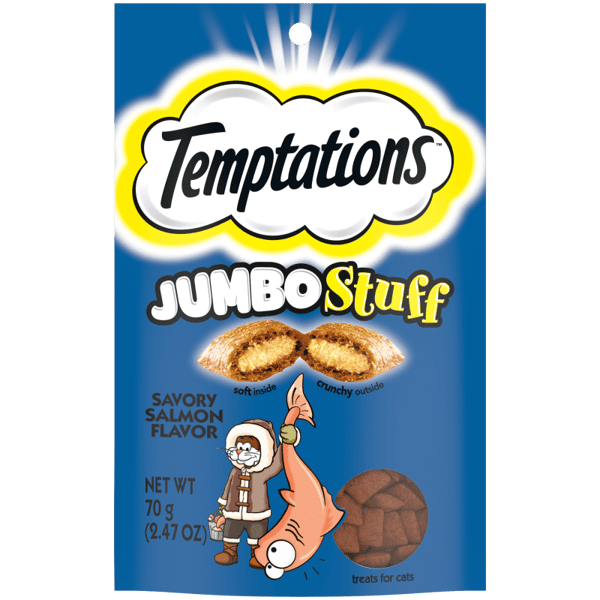
Jumbo Stuff Savory Salmon Flavor Cat Treats
Verified Aug 22, 2026
A crunchy-and-soft salmon-flavored cat treat designed for adult cats, with chicken by-product meal as the primary protein source. At about 2 calories per piece, it can be worked into most cats’ diets in moderation without adding too many extra calories. This is meant as a snack or food topper, not as a complete and balanced daily diet.
Jump to ingredientsAffiliate link · may earn a commission at no extra cost to you
Strong Choice
This is a typical commercial crunchy treat for adult cats, with animal-based protein from chicken by-product meal and meat by-products, plus added vitamins, minerals, taurine, and methionine. It’s fairly calorie-dense for a treat but low enough per piece that it can fit into many cats’ routines if you keep portions controlled. It’s best suited as an occasional reward or topper for otherwise complete and balanced cat food, rather than a primary food source.
Computed from 3 of 3 applicable checks. Missing data is skipped, never counted against a food.
The KibbleLab Score (1–10) is assessed from publicly available product data. Our evaluation is science-based, not marketing-based.
KibbleLab may earn an affiliate commission when you buy through a link. No one can pay for a higher score, or to change what we recommend for your pet.
At a Glance
Where these benefits come from
Benefits the manufacturer highlights in its own product marketing. KibbleLab lists them for reference and does not verify these claims.KibbleLab Review
Strengths
- Uses animal-based proteins (chicken by-product meal and dried meat by-products) rather than relying solely on plant proteins, which helps provide essential amino acids for cats.
- Includes taurine and DL-methionine, important nutrients for feline heart, eye, and urinary health needs.
- Calorie content of about 2 calories per treat makes it easier to factor into daily calorie allowance for weight-conscious cats when used sparingly.
- Contains added vitamins and minerals, which is preferable to unfortified treats.
Considerations
- This product is a treat only and is not labeled as a complete and balanced diet, so it should not replace a nutritionally complete cat food.
- Multiple common allergens are present, including chicken, meat by-products, wheat, corn, and dairy (cheese), so it may not be appropriate for cats with food allergies or sensitivities.
- At 2 calories per piece, generous or frequent treating can still contribute to weight gain, especially in indoor or less active cats—portion control is important.
- Primary carbohydrate sources include ground corn, wheat flour, and brewers rice, which add calories but limited additional nutritional benefit for healthy cats compared with a full diet.
Full Ingredient List
Ingredients and analysis reflect manufacturer data at the time of our last update and can change without notice. Always check the actual product packaging before feeding.
Ingredient filtering helps identify compatible options but is not a substitute for a veterinary elimination diet.
Top 5 Ingredients Explained
01
Chicken By-Product
Chicken by-product is a common protein ingredient in pet foods made from edible parts of the bird not typically consumed by people—such as organs (liver, heart), necks and other tissues—and is used to add protein, flavor and nutrient density. It can provide concentrated protein, essential amino acids, B vitamins and minerals (and may contribute taurine when organ meats are included), but composition and quality vary by source, so pet parents concerned about sourcing, higher ash/fat content or chicken allergies should check the manufacturer’s labeling and quality standards.
02
Corn
Corn is commonly used in dog and cat foods as a digestible source of carbohydrates and calories, and it also provides some plant protein, fiber, B vitamins and minerals while helping with kibble structure and palatability. While generally safe and economical, corn is relatively high in starch and has an incomplete amino acid profile for obligate carnivores (cats), can be a source of mycotoxin contamination if poorly stored, and although true corn allergies are uncommon, some pets may be sensitive, so quality and proper formulation with animal proteins are important.
View ingredient
03
Animal Fat
Animal fat is used in pet foods as a concentrated energy source and palatability enhancer, and can provide fat-soluble vitamin absorption and essential fatty acids (including arachidonic and linoleic acids, depending on the source) that support skin, coat and overall cellular function—particularly important for obligate carnivores like cats. Because it is calorie-dense and prone to oxidation, fats are typically rendered and stabilized; owners should be aware that high-fat diets can contribute to obesity and may trigger pancreatitis in susceptible dogs, so quality, source, and total dietary fat should be considered.
04
Mixed Tocopherol
Mixed tocopherols are a blend of natural vitamin E compounds (alpha, beta, gamma and delta tocopherols) used in pet foods primarily as a natural antioxidant and preservative to protect fats and fat‑soluble nutrients and extend shelf life. They also supply dietary vitamin E—an essential antioxidant for immune function, skin and coat health and cellular integrity in dogs and cats—and are generally safe at typical use levels, though they are not a substitute for a complete vitamin formulation and may be less effective in animals with fat‑absorption disorders.
05
Wheat Flour
Wheat flour is commonly used in pet foods as a carbohydrate source, binder and extender that provides digestible energy, some protein (including gluten), and small amounts of fiber and B‑vitamins when enriched. While generally safe and economical for many dogs, it is not a required ingredient for obligate carnivores like cats, can contribute to excess calories or a high glycemic load, and can trigger food allergies or gluten sensitivity in susceptible pets, so animals with known wheat sensitivities or weight concerns may benefit from wheat‑free formulations.
Nutritional Breakdown
How to read As Fed versus Dry Matter
As fed shows the numbers straight off the label, water included. Dry matter removes the water so you can compare a wet food and a dry food fairly.Not sure how much of this to feed?
The right daily portion depends on your cat's weight, age, and activity level. Create a free account, add your cat, and get their daily calories and portion sizes.
Product Details & Brand
Product Specs
Brand

Temptations (Temptations Treats) is a Mars Petcare brand of crunchy/creamy cat treats. It is positioned as a highly palatable, affordable treat line available in many flavors and formats, including standard treats, dental variants, and functional or playful formats. It targets mainstream cat owners seeking everyday treats rather than complete nutrition.
Manufacturer
Mars Petcare operates large-scale manufacturing facilities in North America, Europe, Asia-Pacific, and Latin America with formal quality and food safety systems modeled on human food standards. Facilities follow HACCP-based programs, Good Manufacturing Practices, and are routinely audited for compliance with local regulatory bodies (e.g., FDA and USDA in the U.S., FEDIAF-related standards in Europe). Mars maintains in‑house research and development centers, employs veterinarians and pet nutrition scientists, and conducts digestibility and palatability studies and AAFCO feeding trials for many of its complete-and-balanced diets.
Manufacturing details are compiled from public sources and not independently verified; they may not reflect contract manufacturing or co-packing.
Recall History
No recall is listed for Temptations Jumbo Stuff Savory Salmon Flavor Cat Treats.
Source: FDA animal food recall listings back to January 2019 · Checked daily, last on Oct 15, 2026
Sign up for the full picture
Ingredient Check
We'll check every ingredient against your pet's profile.
Feeding Calculator
Personalized portion sizes based on your pet's weight, age, and activity level.
Side-by-Side Comparison
Compare this food with alternatives to find the best fit.
Similar Foods


Post your cat's report card and challenge friends to check their food.
Frequently Asked Questions
Has Temptations ever been recalled?
We have no recalls on record for Temptations. We track the FDA's animal food recall listings back to January 2019 and publish every pet food recall automatically. A filing that isn't pet food may not appear here.
How does KibbleLab rate foods?
Our scores are based on ingredient composition, nutritional profile, AAFCO compliance, and health considerations. We don't penalize by-products, grains, or synthetic preservatives. Brands cannot pay for higher scores.
Is KibbleLab a substitute for veterinary advice?
No. KibbleLab provides data-driven food analysis, not medical advice. Always consult your veterinarian before making dietary changes, especially for pets with health conditions.
KibbleLab provides informational content only. This is not veterinary advice. Always consult a qualified veterinarian before changing your pet's diet.
KibbleLab may earn affiliate commissions through product links. No one can pay for a higher score, or to change what we recommend for your pet.
Product data sourced from manufacturer websites, AAFCO statements, and FDA recall listings. Last verified dates reflect our most recent data check. We track the FDA's animal food recall listings back to January 2019 and publish every pet food recall automatically. A filing that isn't pet food may not appear here.

 Continue with Google
 Continue with Facebook