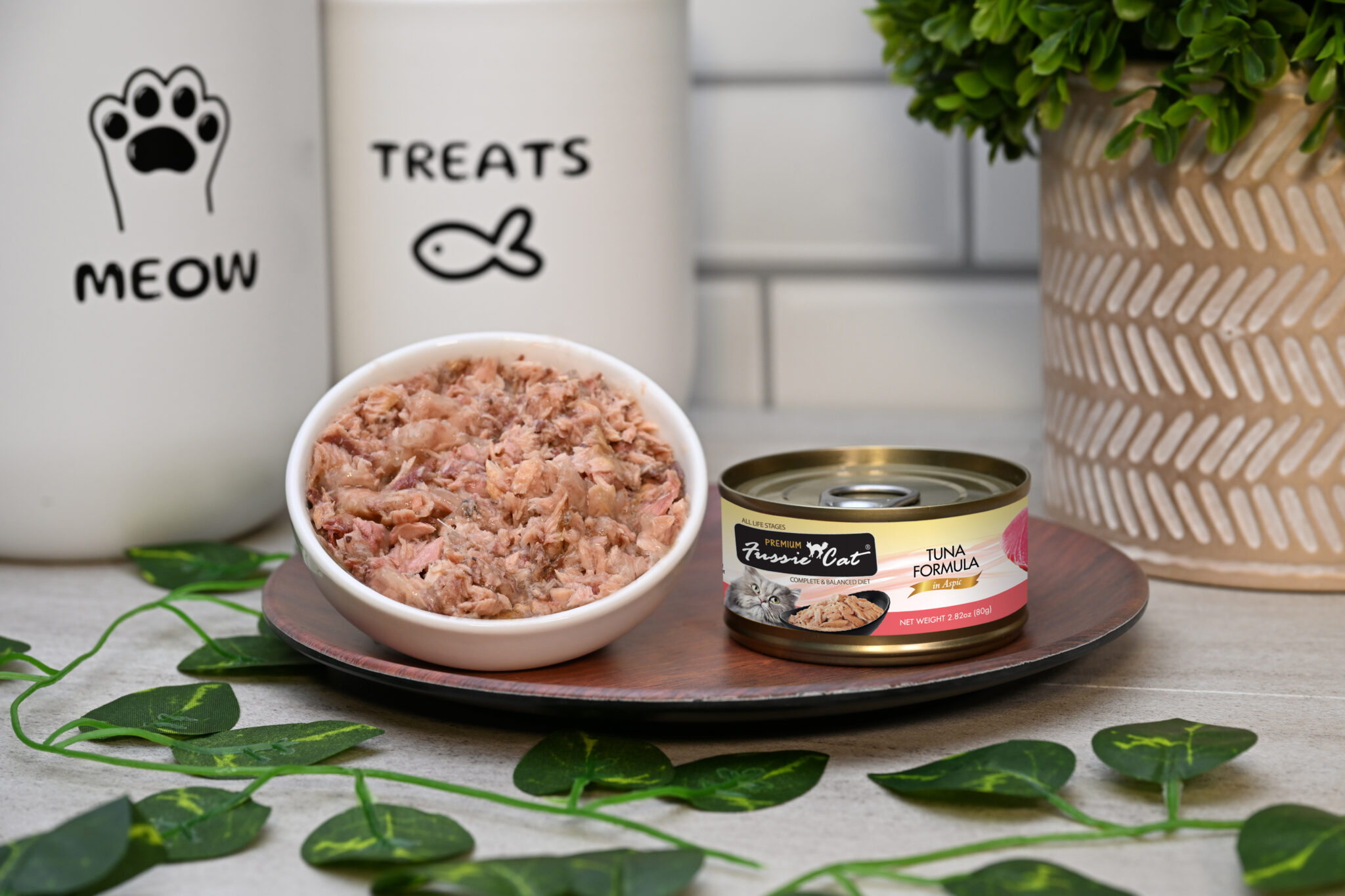

Premium Tuna Formula In Aspic Wet Cat Food
Verified Sep 22, 2026
This is a canned, tuna-based wet food in aspic designed for cats of all ages, including kittens. It provides moderate protein with very low fat, added taurine, and a full vitamin–mineral blend to meet AAFCO standards for all life stages. Omega-3 and omega-6 fatty acids, plus naturally occurring DHA, support overall nutrition while the high moisture content helps with daily hydration.
Jump to ingredientsAffiliate link · may earn a commission at no extra cost to you
Strong Choice
Overall, this is a high-moisture, tuna-focused wet diet that is complete and balanced for all life stages, including growing kittens. The ingredient list is straightforward with tuna as the primary protein, and the formula includes taurine, omega fatty acids, and prebiotic fructooligosaccharides. The fat level is quite low for an all-life-stages food, so it may not be ideal as the only diet for very active or underweight cats without careful monitoring of body condition.
Computed from 4 of 4 applicable checks. Missing data is skipped, never counted against a food.
The KibbleLab Score (1–10) is assessed from publicly available product data. Our evaluation is science-based, not marketing-based.
KibbleLab may earn an affiliate commission when you buy through a link. No one can pay for a higher score, or to change what we recommend for your pet.
At a Glance
Where these benefits come from
Benefits the manufacturer highlights in its own product marketing. KibbleLab lists them for reference and does not verify these claims.KibbleLab Review
Strengths
- Tuna is the first ingredient, providing a clearly named animal protein source that most cats find very palatable.
- Formulated to meet AAFCO nutrient profiles for all life stages, so it can nutritionally support kittens and adults when fed as a primary diet.
- High moisture content can help support hydration, which is particularly helpful for cats that don’t drink much water on their own.
- Includes taurine, omega-3 and omega-6 fatty acids, and prebiotic fructooligosaccharides, which together support overall nutrition and digestive health.
Considerations
- Crude fat is quite low for an all-life-stages formula, which may not provide enough calories or essential fatty acids for some very active, growing, or underweight cats unless intake is carefully managed.
- Tuna-heavy diets can encourage some cats to become very fixated on fish flavors, which can make future diet changes more challenging if needed.
- Cats with known fish allergies or sensitivities should avoid this formula since tuna is the main protein source.
Full Ingredient List
Ingredients and analysis reflect manufacturer data at the time of our last update and can change without notice. Always check the actual product packaging before feeding.
Ingredient filtering helps identify compatible options but is not a substitute for a veterinary elimination diet.
Top 5 Ingredients Explained
01
Tuna
Tuna is commonly used in pet foods as a highly palatable animal protein and flavor enhancer, providing readily digestible protein and omega‑3 fatty acids (EPA/DHA) along with B vitamins for both dogs and cats. While nutritionally beneficial, tuna can be high in mercury or sodium (especially canned), and feeding it exclusively or frequently may cause nutrient imbalances (including risks for thiamine or taurine issues in cats), so it should be offered in moderation as part of a complete, balanced diet.
View ingredient
02
Water
Water is an essential nutrient and the primary solvent and moisture component in pet foods, especially wet and canned diets, and is also used in processing and to adjust texture and palatability. It is vital for digestion, nutrient transport, temperature regulation and waste removal in dogs and cats; pets must have constant access to clean water as dehydration can quickly lead to serious health issues and requirements increase with activity, heat, or illness, while moisture in wet food can help meet part of their daily needs.
03
Sunflower Oil
Sunflower oil is used in pet foods as a concentrated fat source to increase energy density, palatability and supply linoleic acid (an essential omega‑6) that helps maintain healthy skin and coat. It is beneficial for dogs and cats but is high in omega‑6 and low in omega‑3—so formulas should balance fatty acids to avoid an inflammatory imbalance; it is calorie‑dense (important for weight control and pancreatitis-prone animals) and may require antioxidants or high‑oleic formulations for better shelf stability.
04
Tricalcium Phosphate
Tricalcium phosphate is an inorganic mineral commonly used in dog and cat foods as a source of calcium and phosphorus and as an anti-caking/bulking agent to help fortify diets and adjust the dietary Ca:P balance. It supplies minerals important for bone and tooth health and neuromuscular function, but must be formulated carefully to maintain an appropriate calcium‑to‑phosphorus ratio and may be a consideration in pets with kidney disease where phosphorus intake is restricted.
05
Locust Bean Gum
Locust bean gum, a galactomannan extracted from carob seeds, is used in pet foods primarily as a thickener, stabilizer and gelling agent to improve texture and consistency in wet foods, gravies and treats. It contributes soluble fiber that can modestly influence stool firmness and digestive function in dogs and cats and is generally regarded as safe, though excessive levels can increase viscosity, affect palatability or nutrient absorption so it is used at controlled inclusion rates.
Nutritional Breakdown
How to read As Fed versus Dry Matter
As fed shows the numbers straight off the label, water included. Dry matter removes the water so you can compare a wet food and a dry food fairly.What is calorie density
How many calories the food packs per unit. Denser foods mean smaller portions for the same calories.Not sure how much of this to feed?
The right daily portion depends on your cat's weight, age, and activity level. Create a free account, add your cat, and get their daily calories and portion sizes.
Product Details & Brand
Product Specs
AAFCO Nutritional Adequacy
What is AAFCO
Association of American Feed Control Officials. It sets the nutritional
adequacy standards US pet foods are measured against.
What is AAFCO
Association of American Feed Control Officials. It sets the nutritional adequacy standards US pet foods are measured against.Brand
Fussie Cat offers palatable cat foods emphasizing high protein and moisture content. It is known for its 'cats as connoisseurs' approach, focusing on recipes that appeal to finicky eaters.
Manufacturer
Pets Global partners with trusted U.S.-based manufacturers for its products, maintaining oversight of ingredient sourcing and recipe formulation to ensure food safety and nutritional quality standards. Its products are formulated to meet AAFCO nutrient profiles and follow U.S. FDA manufacturing guidelines.
Manufacturing details are compiled from public sources and not independently verified; they may not reflect contract manufacturing or co-packing.
Recall History
No recall is listed for Fussie Cat Premium Tuna Formula In Aspic Wet Cat Food.
Source: FDA animal food recall listings back to January 2019 · Checked daily, last on Oct 16, 2026
Sign up for the full picture
Ingredient Check
We'll check every ingredient against your pet's profile.
Feeding Calculator
Personalized portion sizes based on your pet's weight, age, and activity level.
Side-by-Side Comparison
Compare this food with alternatives to find the best fit.
Similar Foods


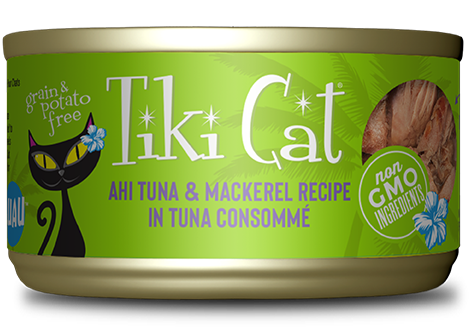
Post your cat's report card and challenge friends to check their food.
Frequently Asked Questions
Has Fussie Cat ever been recalled?
We have no recalls on record for Fussie Cat. We track the FDA's animal food recall listings back to January 2019 and publish every pet food recall automatically. A filing that isn't pet food may not appear here.
How does KibbleLab rate foods?
Our scores are based on ingredient composition, nutritional profile, AAFCO compliance, and health considerations. We don't penalize by-products, grains, or synthetic preservatives. Brands cannot pay for higher scores.
Is KibbleLab a substitute for veterinary advice?
No. KibbleLab provides data-driven food analysis, not medical advice. Always consult your veterinarian before making dietary changes, especially for pets with health conditions.
KibbleLab provides informational content only. This is not veterinary advice. Always consult a qualified veterinarian before changing your pet's diet.
KibbleLab may earn affiliate commissions through product links. No one can pay for a higher score, or to change what we recommend for your pet.
Product data sourced from manufacturer websites, AAFCO statements, and FDA recall listings. Last verified dates reflect our most recent data check. We track the FDA's animal food recall listings back to January 2019 and publish every pet food recall automatically. A filing that isn't pet food may not appear here.

 Continue with Google
 Continue with Facebook