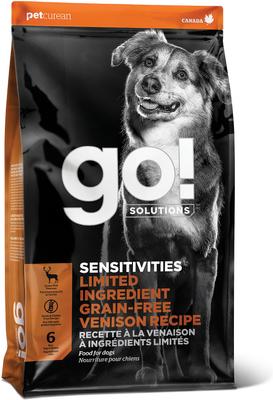
Sensitivities Venison Grain-Free Limited Ingredient Dry Dog Food
Verified Aug 24, 2026
A grain-free, limited-ingredient dry dog food built around venison as the sole animal protein source, this formula is designed for dogs with suspected food sensitivities or delicate digestion. It uses tapioca and legumes (peas, lentils, chickpeas) as the main carbohydrate sources and includes added omega fatty acids and taurine. The recipe is complete and balanced for all life stages except large-breed puppy growth, so it can work for many dogs that need a novel or less common protein.
Jump to ingredientsAffiliate link · may earn a commission at no extra cost to you
Solid Option
This is a well-formulated limited-ingredient, venison-based dry food that suits many dogs with food sensitivities to common proteins or grains. The protein and fat levels are moderate for an all-life-stages diet, and it includes added taurine and omega fatty acids for general support. However, it is grain-free and quite legume-heavy, which is something to consider for dogs from breeds with known heart disease risks.
Computed from 4 of 4 applicable checks. Missing data is skipped, never counted against a food.
The KibbleLab Score (1–10) is assessed from publicly available product data. Our evaluation is science-based, not marketing-based.
KibbleLab may earn an affiliate commission when you buy through a link. No one can pay for a higher score, or to change what we recommend for your pet.
At a Glance
Where these benefits come from
Benefits the manufacturer highlights in its own product marketing. KibbleLab lists them for reference and does not verify these claims.What "not formulated for" means
Life stages this food isn't certified complete and balanced for, based on its AAFCO statement.KibbleLab Review
Strengths
- Venison and venison meal provide a novel animal protein option for dogs that react to more common meats.
- AAFCO complete and balanced for all life stages except large-breed puppy growth, so it can cover most dogs in one household.
- Added taurine, DL-methionine, and L-lysine help support a more complete amino acid profile.
- Includes marine microalgae oil and specified omega-3 and omega-6 levels, which can support skin and coat health.
Considerations
- Peas, pea flour, lentils, and chickpeas are major ingredients, making this a legume-heavy, grain-free diet linked to possible DCM risk in some dogs.
- Venison-only animal protein may not suit very high-energy or working dogs that benefit from higher protein and fat levels.
- Not appropriate for large-breed puppies, so growing large-breed dogs should be on a different formula.
- Dogs with known sensitivities to peas, lentils, or chickpeas will need an alternative without these legumes.
Full Ingredient List
Ingredients and analysis reflect manufacturer data at the time of our last update and can change without notice. Always check the actual product packaging before feeding.
Ingredient filtering helps identify compatible options but is not a substitute for a veterinary elimination diet.
Top 5 Ingredients Explained
01
Venison
Venison is used in pet food primarily as a high-quality, novel animal protein source that is lean and rich in essential amino acids, iron and B vitamins, making it suitable for both dogs and cats and commonly included in limited-ingredient or hypoallergenic formulas. It can benefit pets with sensitivities to common proteins like beef or chicken and offer a lower-fat alternative, but owners should note that it may be too lean for growing animals, still can cause allergies in some pets, and raw or poorly sourced venison may carry parasites or contaminants (risks that are minimized in properly processed commercial diets).
View ingredient
02
Venison
Venison is used in pet food primarily as a high-quality, novel animal protein source that is lean and rich in essential amino acids, iron and B vitamins, making it suitable for both dogs and cats and commonly included in limited-ingredient or hypoallergenic formulas. It can benefit pets with sensitivities to common proteins like beef or chicken and offer a lower-fat alternative, but owners should note that it may be too lean for growing animals, still can cause allergies in some pets, and raw or poorly sourced venison may carry parasites or contaminants (risks that are minimized in properly processed commercial diets).
View ingredient
03
Tapioca
Tapioca is a processed starch from the cassava root commonly used in pet foods and treats as a gluten-free carbohydrate, binder and thickening agent, providing easily digestible calories but very little protein, fat, vitamins or minerals. While useful in hypoallergenic or grain-free formulations, it has limited nutritional value and a high glycemic index, so it should be used in moderation—especially for overweight or diabetic dogs and cats—and only in properly processed form to avoid cassava-related toxins.
View ingredient
04
Pea
Pea is a plant-based ingredient used in pet foods as a source of protein, soluble and insoluble fiber, and micronutrients (often included as whole peas, pea flour, or pea protein concentrate) to boost protein content and improve texture. While peas can provide digestible carbohydrates, fiber, and some plant protein useful especially for dogs, they are not a complete protein for obligate carnivores like cats and — when overused, particularly in concentrated forms or as a major component of grain‑free diets — have been scrutinized for a possible association with canine dilated cardiomyopathy and can contribute to nutrient imbalances or excess calories, so balanced formulation and compliance with AAFCO nutritional profiles are important.
View ingredient
05
Pea Flour
Pea flour is a finely milled powder from whole peas used in pet foods as a plant-based source of protein, starch and fiber to add bulk, improve texture and boost overall protein content. It provides digestible protein, fiber and some micronutrients, but plant proteins are lower in certain essential amino acids (important for cats in particular) and high inclusion of legumes can create formulation imbalances, so manufacturers typically supplement limiting amino acids and process pea flour to reduce anti-nutritional factors; pet owners should note rare allergies and rely on complete, balanced diets rather than single-ingredient comparisons.
Nutritional Breakdown
How to read As Fed versus Dry Matter
As fed shows the numbers straight off the label, water included. Dry matter removes the water so you can compare a wet food and a dry food fairly.What is calorie density
How many calories the food packs per unit. Denser foods mean smaller portions for the same calories.Not sure how much of this to feed?
The right daily portion depends on your dog's weight, age, and activity level. Create a free account, add your dog, and get their daily calories and portion sizes.
Product Details & Brand
Product Specs
AAFCO Nutritional Adequacy
What is AAFCO
Association of American Feed Control Officials. It sets the nutritional
adequacy standards US pet foods are measured against.
What is AAFCO
Association of American Feed Control Officials. It sets the nutritional adequacy standards US pet foods are measured against.Brand
GO! Solutions is a premium brand by Petcurean designed for pets with specific dietary needs such as sensitivities, allergies, or digestive issues. The formulations emphasize functional nutrition, incorporating balanced ingredients and specialized proteins.
Manufacturer
Petcurean oversees its manufacturing through trusted, approved partners in Canada and the United States that operate under strict quality control protocols. Facilities adhere to rigid food safety and quality assurance standards, including HACCP compliance and regular third-party audits.

PSC is a nonprofit that Accredits pet companies on their environmental and social impact, through third-party verification. Petcurean Pet Nutrition Inc. is a PSC Accredited business. View profile
Manufacturing details are compiled from public sources and not independently verified; they may not reflect contract manufacturing or co-packing.
Recall History
No recall is listed for GO! Solutions Sensitivities Venison Grain-Free Limited Ingredient Dry Dog Food.
Source: FDA animal food recall listings back to January 2019 · Checked daily, last on Oct 15, 2026
Sign up for the full picture
Ingredient Check
We'll check every ingredient against your pet's profile.
Feeding Calculator
Personalized portion sizes based on your pet's weight, age, and activity level.
Side-by-Side Comparison
Compare this food with alternatives to find the best fit.
Similar Foods



Post your dog's report card and challenge friends to check their food.
Frequently Asked Questions
Has GO! Solutions ever been recalled?
We have no recalls on record for GO! Solutions. We track the FDA's animal food recall listings back to January 2019 and publish every pet food recall automatically. A filing that isn't pet food may not appear here.
How does KibbleLab rate foods?
Our scores are based on ingredient composition, nutritional profile, AAFCO compliance, and health considerations. We don't penalize by-products, grains, or synthetic preservatives. Brands cannot pay for higher scores.
Is KibbleLab a substitute for veterinary advice?
No. KibbleLab provides data-driven food analysis, not medical advice. Always consult your veterinarian before making dietary changes, especially for pets with health conditions.
KibbleLab provides informational content only. This is not veterinary advice. Always consult a qualified veterinarian before changing your pet's diet.
KibbleLab may earn affiliate commissions through product links. No one can pay for a higher score, or to change what we recommend for your pet.
Product data sourced from manufacturer websites, AAFCO statements, and FDA recall listings. Last verified dates reflect our most recent data check. We track the FDA's animal food recall listings back to January 2019 and publish every pet food recall automatically. A filing that isn't pet food may not appear here.

 Continue with Google
 Continue with Facebook