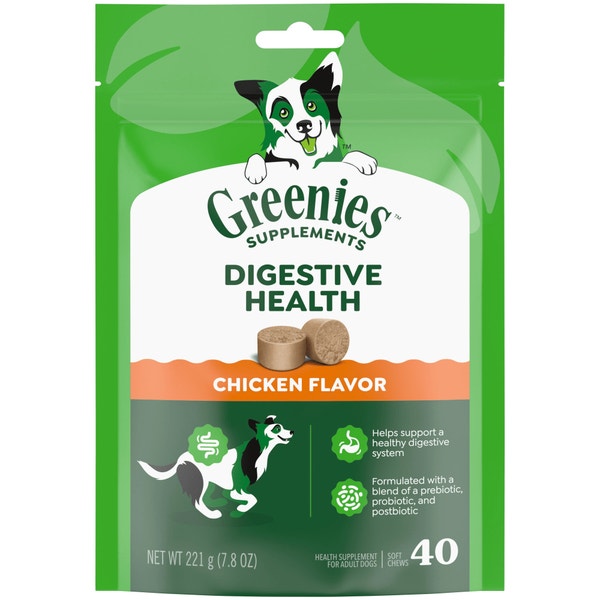

Digestive Health With Probiotics Chicken Supplement
Verified Sep 23, 2026
A soft chew digestive supplement for adult dogs that combines prebiotics, probiotics, and yeast culture to support gut health. It uses Bacillus subtilis as the probiotic, with fructooligosaccharides as a prebiotic and dried chicken for palatability. This is meant to be given alongside a complete dog food, not as a primary diet.
Jump to ingredientsAffiliate link · may earn a commission at no extra cost to you
Strong Choice
This is a well-formulated digestive supplement for adult dogs, offering a clear combination of prebiotic, probiotic, and postbiotic-type yeast components in an easy-to-give soft chew. The use of a defined probiotic strain at a specified CFU level is a plus, and the Greenies brand generally has good quality control. It is a good option for dogs who need extra digestive support but are already on a balanced main diet.
Computed from 3 of 3 applicable checks. Missing data is skipped, never counted against a food.
The KibbleLab Score (1–10) is assessed from publicly available product data. Our evaluation is science-based, not marketing-based.
KibbleLab may earn an affiliate commission when you buy through a link. No one can pay for a higher score, or to change what we recommend for your pet.
At a Glance
Where these benefits come from
Benefits the manufacturer highlights in its own product marketing. KibbleLab lists them for reference and does not verify these claims.KibbleLab Review
Strengths
- Provides a defined probiotic strain, Bacillus subtilis, with a stated CFU amount per chew.
- Includes a prebiotic (fructooligosaccharides) and yeast culture to help support a healthy gut environment.
- Soft chew format with real chicken makes it easier to give even to picky dogs.
- Uses safe, well-established preservatives like citric acid and mixed tocopherols instead of artificial colors or flavors.
Considerations
- This is a supplement only and does not provide complete and balanced nutrition, so it must be fed with a full diet.
- Contains chicken and wheat flour, so it is not suitable for dogs with chicken or wheat allergies.
- Some dogs with very sensitive stomachs may need a gradual introduction to new probiotics to avoid temporary loose stools.
- Calorie content per chew is not listed here, so owners of dogs prone to weight gain should count these as treats in the daily intake.
Full Ingredient List
Ingredients and analysis reflect manufacturer data at the time of our last update and can change without notice. Always check the actual product packaging before feeding.
Ingredient filtering helps identify compatible options but is not a substitute for a veterinary elimination diet.
Top 5 Ingredients Explained
01
Yeast Culture
Yeast culture is a fermented yeast ingredient (commonly Saccharomyces cerevisiae) used in pet foods to provide natural flavors, B vitamins, amino acids and microbial metabolites that can support digestion, gut microbial balance, immune function and overall palatability. It is generally safe for dogs and cats, but animals with known yeast sensitivity or certain immune conditions may require caution and effects can vary depending on whether the product contains live organisms or dried yeast derivatives.
02
FOS
Fructooligosaccharides (FOS) are non-digestible, soluble prebiotic fibers commonly added to pet foods and supplements to feed beneficial gut bacteria and support intestinal health. In dogs and cats they can help improve digestion, stool quality and immune support, but excessive amounts may cause gas or loose stools in sensitive animals so levels should be balanced and introduced gradually.
03
Bacillus Subtilis
Bacillus subtilis is a spore-forming probiotic bacterium added to some pet foods and supplements to support healthy gut microbiota, digestion, and stool quality in dogs and cats. It can help with nutrient utilization and immune support, but effects are strain-specific and depend on viability (spores are heat-tolerant); consult your veterinarian before use for animals with weakened immune systems.
04
Canola Oil
Canola oil is used in pet foods as a concentrated fat source and palatability enhancer that supplies energy and essential fatty acids—mainly omega‑6 (linoleic acid) and some omega‑3 (ALA)—and aids absorption of fat‑soluble vitamins. It can support skin and coat condition when balanced with animal fats or supplemental omega‑3s, but is calorie‑dense so must be portioned to avoid weight gain, does not provide species‑specific fats such as arachidonic acid for cats, and must be kept fresh to prevent oxidation.
05
Citric Acid
Citric acid is commonly used in pet foods as a preservative, pH adjuster and mild flavoring agent that helps inhibit microbial growth and chelate metals to slow fat oxidation and preserve color and freshness. It provides no nutritional value for dogs or cats and is generally safe at the low levels used in commercial diets, though concentrated forms or excessive intake can cause gastrointestinal upset or decreased palatability in sensitive animals.
Nutritional Breakdown
How to read As Fed versus Dry Matter
As fed shows the numbers straight off the label, water included. Dry matter removes the water so you can compare a wet food and a dry food fairly.Product Details & Brand
Product Specs
Brand
Greenies is a dental treat brand for dogs and cats under Mars Petcare. It focuses on oral health, offering chews and treats designed to help reduce plaque and tartar buildup and freshen breath. Many Greenies products carry the Veterinary Oral Health Council (VOHC) Seal of Acceptance for plaque and/or tartar control, and the brand is frequently recommended by veterinarians for dental care support.
Manufacturer
Mars Petcare operates large-scale manufacturing facilities in North America, Europe, Asia-Pacific, and Latin America with formal quality and food safety systems modeled on human food standards. Facilities follow HACCP-based programs, Good Manufacturing Practices, and are routinely audited for compliance with local regulatory bodies (e.g., FDA and USDA in the U.S., FEDIAF-related standards in Europe). Mars maintains in‑house research and development centers, employs veterinarians and pet nutrition scientists, and conducts digestibility and palatability studies and AAFCO feeding trials for many of its complete-and-balanced diets.
Manufacturing details are compiled from public sources and not independently verified; they may not reflect contract manufacturing or co-packing.
Recall History
No recall is listed for Greenies Digestive Health With Probiotics Chicken Supplement.
Source: FDA animal food recall listings back to January 2019 · Checked daily, last on Oct 16, 2026
Sign up for the full picture
Ingredient Check
We'll check every ingredient against your pet's profile.
Feeding Calculator
Personalized portion sizes based on your pet's weight, age, and activity level.
Side-by-Side Comparison
Compare this food with alternatives to find the best fit.
Similar Foods


Post your dog's report card and challenge friends to check their food.
Frequently Asked Questions
Has Greenies ever been recalled?
We have no recalls on record for Greenies. We track the FDA's animal food recall listings back to January 2019 and publish every pet food recall automatically. A filing that isn't pet food may not appear here.
How does KibbleLab rate foods?
Our scores are based on ingredient composition, nutritional profile, AAFCO compliance, and health considerations. We don't penalize by-products, grains, or synthetic preservatives. Brands cannot pay for higher scores.
Is KibbleLab a substitute for veterinary advice?
No. KibbleLab provides data-driven food analysis, not medical advice. Always consult your veterinarian before making dietary changes, especially for pets with health conditions.
KibbleLab provides informational content only. This is not veterinary advice. Always consult a qualified veterinarian before changing your pet's diet.
KibbleLab may earn affiliate commissions through product links. No one can pay for a higher score, or to change what we recommend for your pet.
Product data sourced from manufacturer websites, AAFCO statements, and FDA recall listings. Last verified dates reflect our most recent data check. We track the FDA's animal food recall listings back to January 2019 and publish every pet food recall automatically. A filing that isn't pet food may not appear here.

 Continue with Google
 Continue with Facebook