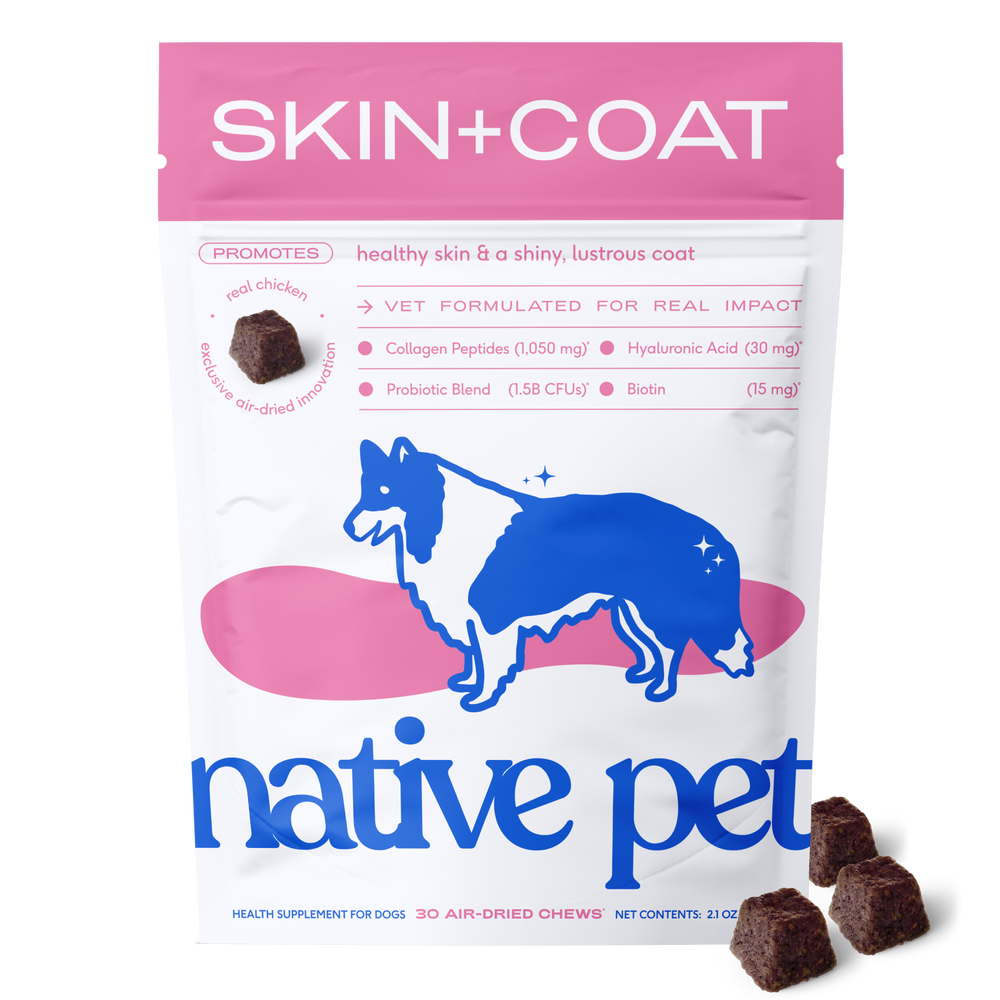

Skin + Coat Chews Supplement
Verified Oct 12, 2026
These air-dried chicken chews are a skin and coat supplement for dogs of all ages, designed to be given alongside a complete diet. They feature bovine and porcine collagen, salmon oil, microalgae-derived DHA, and vitamin E to support skin and coat, with added probiotics that may help digestion. The soft, jerky-style pieces are intended to be given daily by body weight.
Jump to ingredientsAffiliate link · may earn a commission at no extra cost to you
Strong Choice
This is a well-designed skin and coat supplement chew that combines several evidence-based ingredients like collagen, salmon oil, DHA, vitamin E, zinc, biotin, and hyaluronic acid. The addition of a multi-strain probiotic blend is a nice bonus for gut support. It does contain chicken, so it isn’t appropriate for dogs with chicken allergies, and it should always be used as a supplement to, not a replacement for, a complete dog food.
Computed from 3 of 3 applicable checks. Missing data is skipped, never counted against a food.
The KibbleLab Score (1–10) is assessed from publicly available product data. Our evaluation is science-based, not marketing-based.
KibbleLab may earn an affiliate commission when you buy through a link. No one can pay for a higher score, or to change what we recommend for your pet.
At a Glance
Where these benefits come from
Benefits the manufacturer highlights in its own product marketing. KibbleLab lists them for reference and does not verify these claims.KibbleLab Review
Strengths
- Provides multiple skin and coat nutrients, including collagen, salmon oil, DHA, vitamin E, zinc, and biotin.
- Uses microalgae-based DHA and fish oil, which supply omega-3s that can support skin, coat, and overall wellness.
- Includes a multi-strain probiotic blend that may help support digestive and immune health.
- Air-dried chew format with clear dosing by body weight makes daily use straightforward for most dogs.
Considerations
- This is a supplement, not a complete diet, so it must be fed along with a balanced dog food.
- Contains chicken, so it is not suitable for dogs with known chicken allergies or sensitivities.
- Calorie content per chew is modest but should still be counted toward the dog’s daily calorie intake, especially in small dogs.
- Puppies under 3 months should not use this product, and very young or medically fragile dogs should be started only under veterinary guidance.
Full Ingredient List
Ingredients and analysis reflect manufacturer data at the time of our last update and can change without notice. Always check the actual product packaging before feeding.
Ingredient filtering helps identify compatible options but is not a substitute for a veterinary elimination diet.
Top 5 Ingredients Explained
01
Collagen Peptide
Collagen peptides are hydrolyzed collagen proteins used in pet foods and supplements as a highly digestible source of structural amino acids (notably glycine, proline and hydroxyproline) and are commonly added to joint, skin and coat formulas for dogs and cats to support connective tissue and mobility. They can provide targeted support for aging or active pets but are not a complete protein source of all essential amino acids, so they should complement a balanced diet; owners should choose products from reputable sources and note that palatability and measurable benefits can vary.
02
Collagen
Collagen is an animal-derived structural protein commonly added to pet foods and supplements as gelatin or hydrolyzed collagen to support joint, skin and coat health and to provide digestible connective-tissue protein for dogs and cats. It supplies key amino acids such as glycine and proline important for cartilage and skin maintenance but is low in tryptophan and not a complete protein—so it should not replace higher-quality muscle proteins—and pet owners should note source quality and potential allergen/contaminant concerns.
03
DHA
DHA (docosahexaenoic acid) is a long-chain omega-3 fatty acid added to pet foods as a functional nutrient to support brain and retinal development in puppies and kittens and to help maintain healthy skin, coat, joint comfort, and anti-inflammatory balance in adult dogs and cats. It is usually sourced from fish or algal oils and should be provided in stabilized, contaminant‑tested forms (cats require preformed DHA), with attention to proper dosing because high amounts or oxidized oils can cause gastrointestinal upset, affect blood clotting, or introduce environmental contaminants—consult your veterinarian for appropriate use.
04
Microalgae Oil
Microalgae oil is used in pet foods as a concentrated, sustainably produced source of long-chain omega‑3 fatty acids—primarily DHA (and sometimes EPA)—to support cognitive and visual development, skin and coat condition, and anti-inflammatory/joint health as an alternative to fish oil. It benefits both dogs and cats (notably kittens who need DHA for development) but is calorie-dense and must be stabilized against oxidation and dosed appropriately to avoid gastrointestinal upset or interactions with anticoagulant medications, so veterinary guidance is recommended for long-term or high-dose use.
05
Salmon Oil
Salmon oil is used in pet foods as a concentrated source of fat and long‑chain omega‑3 fatty acids (EPA and DHA) to support skin and coat condition, reduce inflammation, and aid joint, cardiac and cognitive health in both dogs and cats (cats particularly benefit from preformed DHA). Because it is calorie‑dense and prone to oxidation, choose stabilized, quality‑tested salmon oil from reputable sources to avoid rancidity and contaminants, and consult your veterinarian for appropriate dosing or if your pet has a fish allergy.
Product Details & Brand
Product Specs
Brand

Native Pet is a premium pet nutrition brand known for its minimal-ingredient, whole-food supplements, meal toppers, and functional treats for dogs. The brand targets health-conscious pet parents seeking natural alternatives to conventional supplements, with an emphasis on clean ingredients and functional benefits.
Manufacturer
Native Pet partners with manufacturing facilities in the United States that comply with FDA regulations for pet food and supplement production and follow Good Manufacturing Practices (GMP). The company maintains quality oversight through ingredient sourcing verification and third-party testing for safety and efficacy.
Manufacturing details are compiled from public sources and not independently verified; they may not reflect contract manufacturing or co-packing.
Recall History
No recall is listed for Native Pet Skin + Coat Chews Supplement.
Source: FDA animal food recall listings back to January 2019 · Checked daily, last on Oct 16, 2026
Sign up for the full picture
Ingredient Check
We'll check every ingredient against your pet's profile.
Feeding Calculator
Personalized portion sizes based on your pet's weight, age, and activity level.
Side-by-Side Comparison
Compare this food with alternatives to find the best fit.
Similar Foods


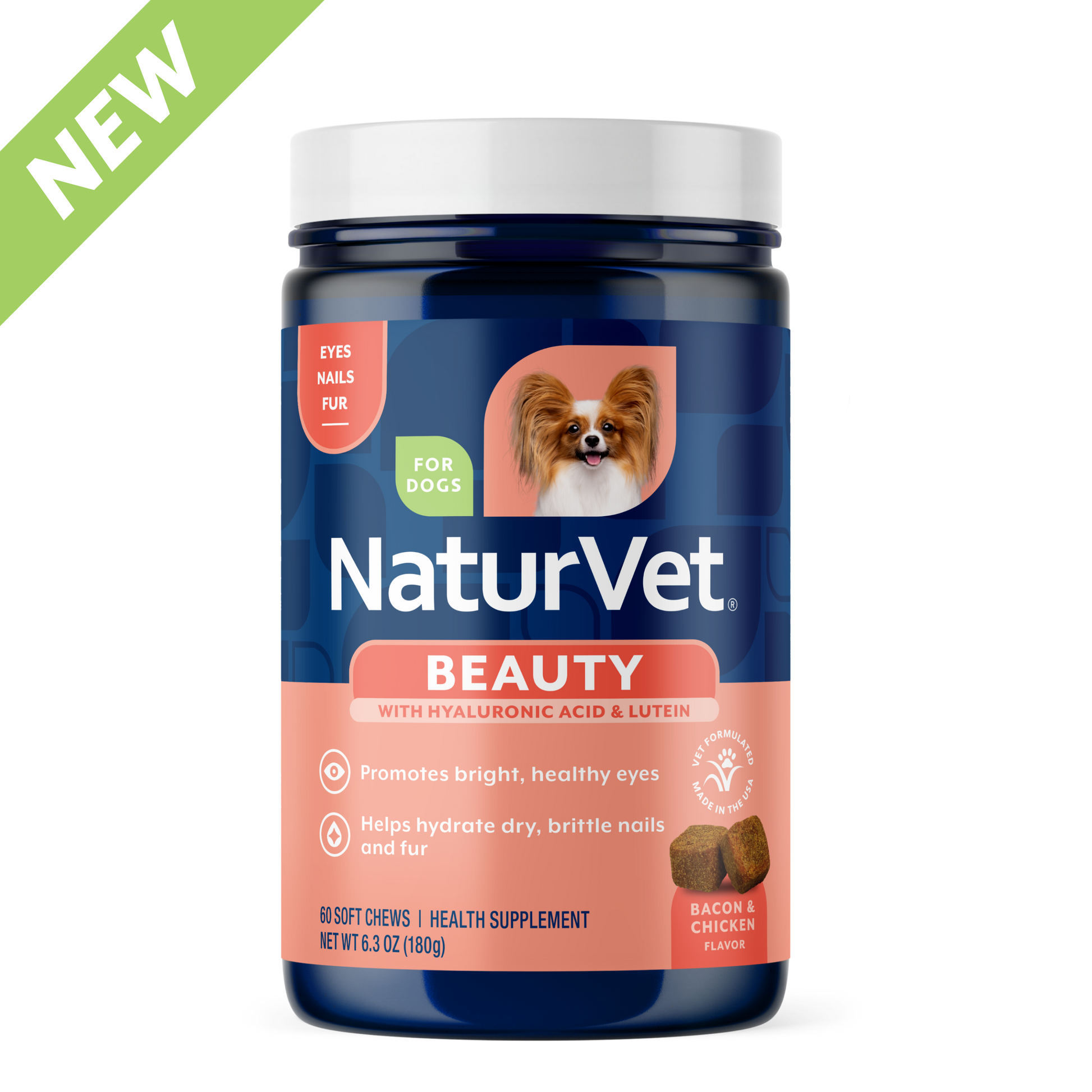


Post your dog's report card and challenge friends to check their food.
Frequently Asked Questions
Has Native Pet ever been recalled?
We have no recalls on record for Native Pet. We track the FDA's animal food recall listings back to January 2019 and publish every pet food recall automatically. A filing that isn't pet food may not appear here.
How does KibbleLab rate foods?
Our scores are based on ingredient composition, nutritional profile, AAFCO compliance, and health considerations. We don't penalize by-products, grains, or synthetic preservatives. Brands cannot pay for higher scores.
Is KibbleLab a substitute for veterinary advice?
No. KibbleLab provides data-driven food analysis, not medical advice. Always consult your veterinarian before making dietary changes, especially for pets with health conditions.
KibbleLab provides informational content only. This is not veterinary advice. Always consult a qualified veterinarian before changing your pet's diet.
KibbleLab may earn affiliate commissions through product links. No one can pay for a higher score, or to change what we recommend for your pet.
Product data sourced from manufacturer websites, AAFCO statements, and FDA recall listings. Last verified dates reflect our most recent data check. We track the FDA's animal food recall listings back to January 2019 and publish every pet food recall automatically. A filing that isn't pet food may not appear here.

 Continue with Google
 Continue with Facebook