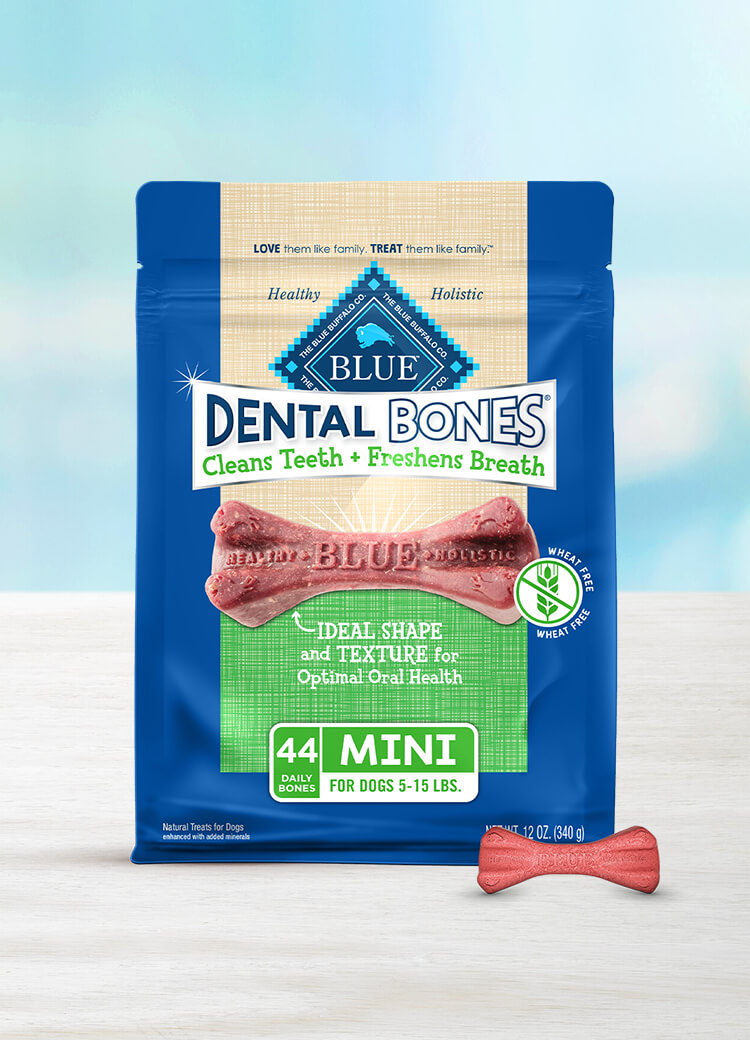
Blue Dental Bones Mini Dental Chew Treats
Verified Oct 11, 2026
These are small, soft-chew dental treats for dogs designed to be given once daily to help support oral hygiene. They rely mainly on potato, fiber sources, and plant-based ingredients, with gelatin and pea protein contributing some protein content. The chewy texture and added parsley and rosemary oil are aimed at freshening breath and helping to clean teeth in small-breed dogs.
Jump to ingredientsAffiliate link · may earn a commission at no extra cost to you
Top Pick
This is a thoughtfully formulated dental chew for small dogs that uses potatoes, plant fibers, and gelatin to create a chewable texture that can help with mechanical cleaning of the teeth. Protein is modest, which is fine for a treat, and the fiber level is relatively high, likely contributing to the product’s texture and potential dental benefit. It’s best used as an occasional or daily dental treat alongside, not instead of, regular tooth brushing and professional dental care.
Computed from 2 of 3 applicable checks. Missing data is skipped, never counted against a food.
The KibbleLab Score (1–10) is assessed from publicly available product data. Our evaluation is science-based, not marketing-based.
KibbleLab may earn an affiliate commission when you buy through a link. No one can pay for a higher score, or to change what we recommend for your pet.
At a Glance
Where these benefits come from
Benefits the manufacturer highlights in its own product marketing. KibbleLab lists them for reference and does not verify these claims.KibbleLab Review
Strengths
- Formulated as a soft, chewy dental treat that can help provide some mechanical cleaning action for teeth and support fresher breath.
- Uses simple carbohydrate and fiber sources (potatoes, powdered cellulose, oat hulls, flaxseed) that are generally well tolerated by most dogs.
- Includes flaxseed and sunflower oil, which provide beneficial fatty acids, and small amounts of fruits/vegetables like carrot, blueberries, and parsley.
- Naturally preserved with citric acid and mixed tocopherols, avoiding artificial colors (beet added only for color) and synthetic preservatives in this formula.
Considerations
- This is a low-protein, higher-fiber treat and should not replace a complete and balanced dog food; it’s meant to be an add-on only.
- Contains pea protein and flaxseed, which are fine for most dogs but may not suit a dog with known sensitivities to legumes or seeds.
- As with any chew, there is a small risk of gulping or choking, especially in enthusiastic eaters, so close supervision while your dog chews is important.
Full Ingredient List
Ingredients and analysis reflect manufacturer data at the time of our last update and can change without notice. Always check the actual product packaging before feeding.
Ingredient filtering helps identify compatible options but is not a substitute for a veterinary elimination diet.
Top 5 Ingredients Explained
01
Potato
Potato is commonly used in pet foods as a digestible carbohydrate source and functional binder, supplying starch, fiber, and modest amounts of vitamins (B6, C) and potassium—often included as cooked or dehydrated flakes, starch, or protein concentrates. While it provides energy and helps formulate grain‑free recipes, potatoes are not a primary protein for dogs or cats (and are not nutritionally required for obligate‑carnivore cats), can contribute to excess calories or affect blood glucose in diabetic animals, and must be cooked and free of green skins or sprouts to avoid solanine toxicity; allergies are uncommon but possible.
View ingredient
02
Cellulose Powder
Cellulose powder is an insoluble, plant-derived fiber commonly used in pet foods as a bulking agent, binder and calorie-diluting texturizer to help control weight and improve stool formation; it is not digestible by dogs or cats and contributes negligible energy or vitamins. While it can aid stool consistency and manufacturing performance, cellulose is non‑fermentable so offers little prebiotic benefit, and high inclusions can reduce palatability or displace nutrients—formulations, especially for cats with lower fiber tolerance, should be balanced accordingly.
03
Vegetable Glycerin
Vegetable glycerin is a plant-derived humectant and sweet-tasting solvent commonly used in pet foods and treats to retain moisture, improve texture, dissolve flavorings or vitamins, and enhance palatability. It provides usable calories, is generally regarded as safe for dogs and cats in typical amounts, but excessive intake can cause digestive upset and may be a consideration for diabetic pets or those needing calorie-restricted diets.
04
Water
Water is an essential nutrient and the primary solvent and moisture component in pet foods, especially wet and canned diets, and is also used in processing and to adjust texture and palatability. It is vital for digestion, nutrient transport, temperature regulation and waste removal in dogs and cats; pets must have constant access to clean water as dehydration can quickly lead to serious health issues and requirements increase with activity, heat, or illness, while moisture in wet food can help meet part of their daily needs.
05
Gelatin
Gelatin, a collagen-derived gelling agent and binder, is commonly used in pet treats, chews and wet foods to improve texture, moisture retention and as an ingredient in joint or skin supplements. It provides collagen-related amino acids (e.g., glycine and proline) that may support joint and coat health but is not a complete protein—lacking essential amino acids such as tryptophan and taurine—so it should not replace balanced animal protein; source and quality (bovine vs. porcine) can matter for dietary preferences and safety concerns.
Nutritional Breakdown
How to read As Fed versus Dry Matter
As fed shows the numbers straight off the label, water included. Dry matter removes the water so you can compare a wet food and a dry food fairly.Product Details & Brand
Product Specs
Brand
Blue Buffalo is a premium pet food brand that positions itself around natural ingredients, real meat-first recipes, and the avoidance of artificial additives, by-products, or fillers. The brand appeals to health-conscious pet owners seeking natural, holistic nutrition for their pets, with product lines such as Blue Life Protection Formula, Blue Wilderness, Blue Basics, and Blue Freedom.
Manufacturer
Blue Buffalo products are produced under strict quality assurance and safety standards, with oversight designed to meet AAFCO nutritional adequacy guidelines. The company operates both its own Heartland Pet Food Manufacturing facility in Joplin, Missouri, and works with co-packers that follow Good Manufacturing Practices (GMP) and HACCP standards. General Mills enforces corporate-wide quality and food safety protocols, including supplier audits and ingredient traceability.
Manufacturing details are compiled from public sources and not independently verified; they may not reflect contract manufacturing or co-packing.
Recall History
No recall is listed for Blue Buffalo Blue Dental Bones Mini Dental Chew Treats.
Source: FDA animal food recall listings back to January 2019 · Checked daily, last on Oct 16, 2026
Sign up for the full picture
Ingredient Check
We'll check every ingredient against your pet's profile.
Feeding Calculator
Personalized portion sizes based on your pet's weight, age, and activity level.
Side-by-Side Comparison
Compare this food with alternatives to find the best fit.
Similar Foods


Post your dog's report card and challenge friends to check their food.
Frequently Asked Questions
Has Blue Buffalo ever been recalled?
We have no recalls on record for Blue Buffalo. We track the FDA's animal food recall listings back to January 2019 and publish every pet food recall automatically. A filing that isn't pet food may not appear here.
How does KibbleLab rate foods?
Our scores are based on ingredient composition, nutritional profile, AAFCO compliance, and health considerations. We don't penalize by-products, grains, or synthetic preservatives. Brands cannot pay for higher scores.
Is KibbleLab a substitute for veterinary advice?
No. KibbleLab provides data-driven food analysis, not medical advice. Always consult your veterinarian before making dietary changes, especially for pets with health conditions.
KibbleLab provides informational content only. This is not veterinary advice. Always consult a qualified veterinarian before changing your pet's diet.
KibbleLab may earn affiliate commissions through product links. No one can pay for a higher score, or to change what we recommend for your pet.
Product data sourced from manufacturer websites, AAFCO statements, and FDA recall listings. Last verified dates reflect our most recent data check. We track the FDA's animal food recall listings back to January 2019 and publish every pet food recall automatically. A filing that isn't pet food may not appear here.

 Continue with Google
 Continue with Facebook