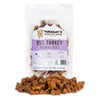
95% Turkey Training Bites Treats
Verified Aug 23, 2026
These bite-sized turkey treats are high in protein and moderate in fat, making them a tasty reward option for most dogs. With a very short ingredient list based mainly on turkey plus vegetable glycerin, they can work well for pets who do better with simpler formulas. They’re designed as small training bites, so they’re easy to use frequently during training sessions.
Jump to ingredientsAffiliate link · may earn a commission at no extra cost to you
Top Pick
This is a simple, meat-focused training treat with turkey as the primary ingredient and minimal extras, which many dogs tolerate well. The protein and fat levels are appropriate for a high-value reward, but the calories can add up if used very liberally. It can suit many dogs, including those who do better with limited ingredients, as long as total daily calories are monitored.
Computed from 3 of 3 applicable checks. Missing data is skipped, never counted against a food.
The KibbleLab Score (1–10) is assessed from publicly available product data. Our evaluation is science-based, not marketing-based.
KibbleLab may earn an affiliate commission when you buy through a link. No one can pay for a higher score, or to change what we recommend for your pet.
At a Glance
Where these benefits come from
Benefits the manufacturer highlights in its own product marketing. KibbleLab lists them for reference and does not verify these claims.KibbleLab Review
Strengths
- Turkey is the main ingredient, providing a high-protein, animal-based reward for training.
- The very short ingredient list may be helpful for dogs that do better on simpler treats.
- Each piece is small and about 3 calories, which is useful for frequent training rewards.
- Low fiber and moderate fat make these quite digestible for most healthy dogs.
Considerations
- Turkey is a common allergen for some dogs, so it is not suitable for dogs with known poultry allergies.
- At about 3 calories per treat, frequent use can contribute significant extra calories for small or inactive dogs.
- This is a treat, not a complete diet, so it should make up only a small portion of your dog’s daily intake.
Full Ingredient List
Ingredients and analysis reflect manufacturer data at the time of our last update and can change without notice. Always check the actual product packaging before feeding.
Ingredient filtering helps identify compatible options but is not a substitute for a veterinary elimination diet.
Top 5 Ingredients Explained
01
Turkey
Turkey is commonly used as a primary animal protein in dog and cat foods, offering highly digestible, high‑quality protein and supplying essential amino acids along with B vitamins, phosphorus and zinc to support muscle maintenance and metabolism. Its fat level varies by cut so products can be lean or richer; some pets may develop allergies to poultry, cooked bones are hazardous, raw meat carries bacterial risk, and owners should rely on balanced commercial formulations (and ensure adequate taurine for cats) if turkey is a main ingredient.
View ingredient
02
Vegetable Glycerin
Vegetable glycerin is a plant-derived humectant and sweet-tasting solvent commonly used in pet foods and treats to retain moisture, improve texture, dissolve flavorings or vitamins, and enhance palatability. It provides usable calories, is generally regarded as safe for dogs and cats in typical amounts, but excessive intake can cause digestive upset and may be a consideration for diabetic pets or those needing calorie-restricted diets.
Nutritional Breakdown
How to read As Fed versus Dry Matter
As fed shows the numbers straight off the label, water included. Dry matter removes the water so you can compare a wet food and a dry food fairly.What is calorie density
How many calories the food packs per unit. Denser foods mean smaller portions for the same calories.Not sure how much of this to feed?
The right daily portion depends on your dog's weight, age, and activity level. Create a free account, add your dog, and get their daily calories and portion sizes.
Product Details & Brand
Product Specs
Brand

All-natural, single-ingredient dog chews and treats — odor-free bully sticks, antlers, bones, tendons, tremenda chews, gullets, ears and tracheas — with no chemicals, additives or preservatives at any point in processing. Positioned as a premium natural-chew supplier for independent and boutique pet stores, with the tagline "Dogs need to chew. We make it natural."
Manufacturer
No owned plants; products are sourced from partner processing plants in South America (chiefly Brazil), the USA and Europe, with third-party laboratory testing of every batch for E. coli and salmonella, metal-detection screening, and hand-sorting.

PSC is a nonprofit that Accredits pet companies on their environmental and social impact, through third-party verification. Tuesday's Natural Dog Company is a PSC Accredited business. View profile
Manufacturing details are compiled from public sources and not independently verified; they may not reflect contract manufacturing or co-packing.
Recall History
No recall is listed for Tuesday's Natural Dog Company 95% Turkey Training Bites Treats.
Source: FDA animal food recall listings back to January 2019 · Checked daily, last on Oct 16, 2026
Sign up for the full picture
Ingredient Check
We'll check every ingredient against your pet's profile.
Feeding Calculator
Personalized portion sizes based on your pet's weight, age, and activity level.
Side-by-Side Comparison
Compare this food with alternatives to find the best fit.
Similar Foods


Post your dog's report card and challenge friends to check their food.
Frequently Asked Questions
Has Tuesday's Natural Dog Company ever been recalled?
We have no recalls on record for Tuesday's Natural Dog Company. We track the FDA's animal food recall listings back to January 2019 and publish every pet food recall automatically. A filing that isn't pet food may not appear here.
How does KibbleLab rate foods?
Our scores are based on ingredient composition, nutritional profile, AAFCO compliance, and health considerations. We don't penalize by-products, grains, or synthetic preservatives. Brands cannot pay for higher scores.
Is KibbleLab a substitute for veterinary advice?
No. KibbleLab provides data-driven food analysis, not medical advice. Always consult your veterinarian before making dietary changes, especially for pets with health conditions.
KibbleLab provides informational content only. This is not veterinary advice. Always consult a qualified veterinarian before changing your pet's diet.
KibbleLab may earn affiliate commissions through product links. No one can pay for a higher score, or to change what we recommend for your pet.
Product data sourced from manufacturer websites, AAFCO statements, and FDA recall listings. Last verified dates reflect our most recent data check. We track the FDA's animal food recall listings back to January 2019 and publish every pet food recall automatically. A filing that isn't pet food may not appear here.

 Continue with Google
 Continue with Facebook