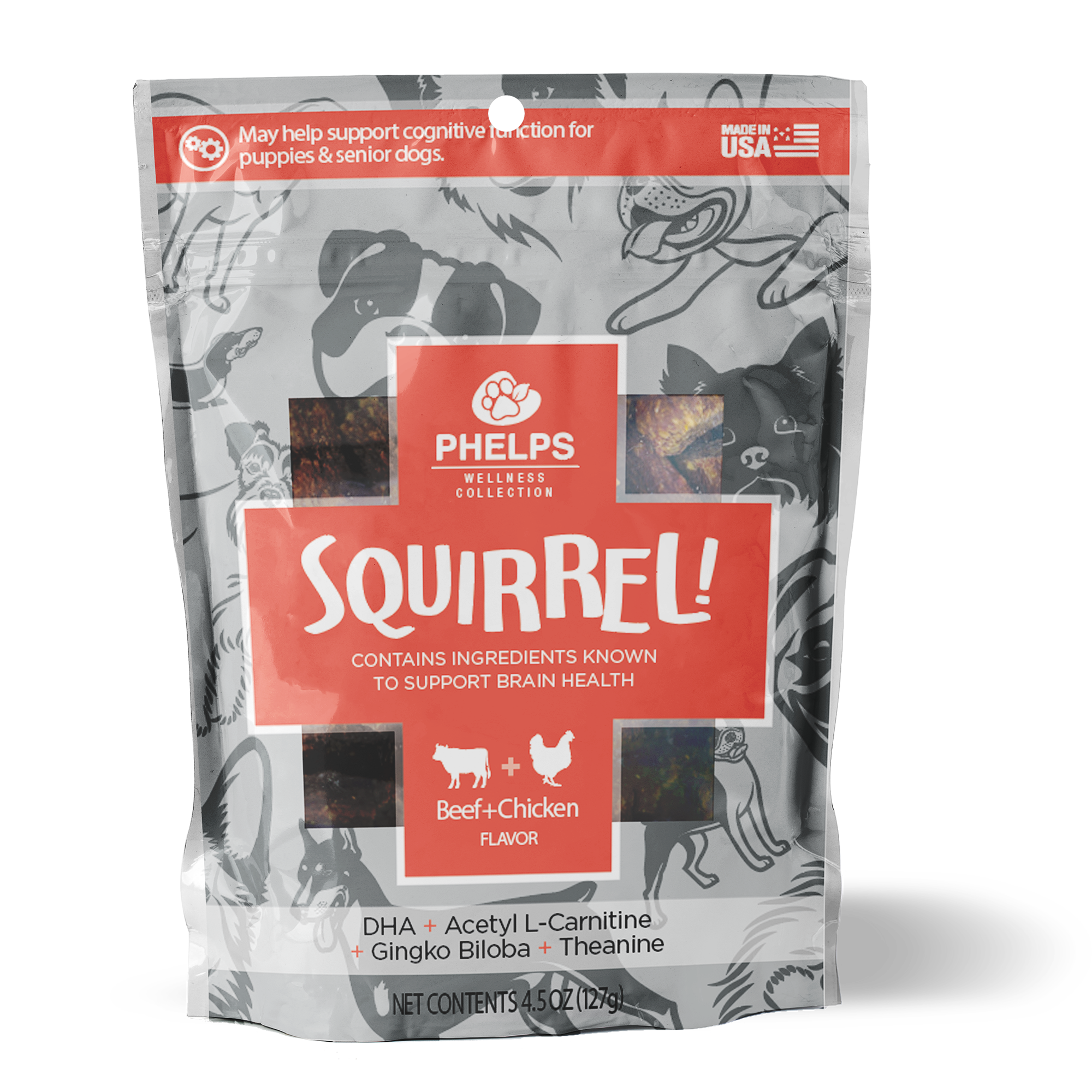
Squirrel! Brain Health Beef Flavor Treat
Verified Oct 11, 2026
A soft, beef-flavor functional dog treat designed for puppies through seniors, with added nutrients aimed at supporting brain function. It includes DHA from tuna oil, acetyl L-carnitine, L-theanine, and ginkgo biloba along with grains and sweet potato for structure and energy. This is intended as a supplemental reward treat rather than a complete diet.
Jump to ingredientsAffiliate link · may earn a commission at no extra cost to you
Strong Choice
This is a relatively high-protein, higher-fat functional treat that adds some well-studied brain-supportive ingredients like DHA and acetyl L-carnitine. It can work nicely as an occasional training or enrichment reward for healthy dogs of any age. Because it contains beef, chicken, dairy, and fish, it will not be suitable for dogs with common food allergies to those proteins.
Computed from 3 of 3 applicable checks. Missing data is skipped, never counted against a food.
The KibbleLab Score (1–10) is assessed from publicly available product data. Our evaluation is science-based, not marketing-based.
KibbleLab may earn an affiliate commission when you buy through a link. No one can pay for a higher score, or to change what we recommend for your pet.
At a Glance
Where these benefits come from
Benefits the manufacturer highlights in its own product marketing. KibbleLab lists them for reference and does not verify these claims.KibbleLab Review
Strengths
- Includes DHA from tuna oil, which is an omega-3 fatty acid important for brain and eye development and function.
- Acetyl L-carnitine, L-theanine, and ginkgo biloba add a clear functional focus on cognitive support ingredients.
- Protein and fat levels are fairly high for a treat, making it more nutritious than many low-protein biscuits.
- Uses mixed tocopherols as a preservative, which is a safe and commonly used antioxidant in pet foods.
Considerations
- This is a treat, not a complete and balanced diet, so it should make up only a small portion of your dog’s daily calories.
- Contains beef, chicken, dairy, and fish, so it is not a good choice for dogs with allergies to any of those ingredients.
- At about 26 calories per treat, portions should be limited for dogs prone to weight gain, especially small breeds.
- Includes multiple different protein sources, so it is not ideal if you are trying to keep to a very simple or limited-ingredient regimen.
Full Ingredient List
Ingredients and analysis reflect manufacturer data at the time of our last update and can change without notice. Always check the actual product packaging before feeding.
Ingredient filtering helps identify compatible options but is not a substitute for a veterinary elimination diet.
Top 5 Ingredients Explained
01
DHA
DHA (docosahexaenoic acid) is a long-chain omega-3 fatty acid added to pet foods as a functional nutrient to support brain and retinal development in puppies and kittens and to help maintain healthy skin, coat, joint comfort, and anti-inflammatory balance in adult dogs and cats. It is usually sourced from fish or algal oils and should be provided in stabilized, contaminant‑tested forms (cats require preformed DHA), with attention to proper dosing because high amounts or oxidized oils can cause gastrointestinal upset, affect blood clotting, or introduce environmental contaminants—consult your veterinarian for appropriate use.
02
Tuna Oil
Tuna oil is used in pet food as a concentrated fat source and flavor enhancer that supplies long-chain omega-3 fatty acids (EPA and DHA), which can support skin and coat condition, joint mobility, and cognitive and anti-inflammatory health in both dogs and cats. Because it is calorie-dense and can oxidize or contain environmental contaminants if not properly refined, manufacturers should use stabilized, high-quality tuna oil and pet parents should monitor portion sizes and watch for fish allergies or gastrointestinal sensitivity.
03
Acetyl L-Carnitine
Acetyl L-carnitine is a bioavailable form of the nutrient L-carnitine commonly used in pet foods and supplements to support mitochondrial fatty acid transport and cellular energy metabolism, and it is sometimes added to aid cognitive function in aging dogs and cats or to support weight and heart health. When used appropriately it can help energy production and cognitive support, but dosing should follow veterinary guidance—unnecessary supplementation offers no benefit and caution is advised for animals with seizure disorders or those on concurrent medications.
04
Ginkgo Biloba
Ginkgo biloba is used in pet foods and supplements as an herbal ingredient thought to provide antioxidant flavonoids and terpenoids and to support cognitive function and circulation rather than as an essential nutrient. It may be considered for older dogs or cats with age-related cognitive or circulatory concerns, but evidence is limited and standardized extracts can interact with anticoagulant drugs, may increase bleeding risk, and seeds contain neurotoxic compounds—consult your veterinarian for safe dosing and suitability.
View ingredient
05
L-Theanine
L‑Theanine is a naturally occurring amino acid commonly added to pet foods and supplements as a calming/functional ingredient to help reduce stress and promote relaxation without sedation. It has shown promise in dogs (and to a lesser extent cats) for easing situational anxiety and improving calmness, but effects can vary, proper dosing is important, and owners should consult their veterinarian—especially if the pet is on medications or has health conditions—because it is an adjunct to, not a replacement for, behavioral training or medical treatment.
Nutritional Breakdown
How to read As Fed versus Dry Matter
As fed shows the numbers straight off the label, water included. Dry matter removes the water so you can compare a wet food and a dry food fairly.What is calorie density
How many calories the food packs per unit. Denser foods mean smaller portions for the same calories.Not sure how much of this to feed?
The right daily portion depends on your dog's weight, age, and activity level. Create a free account, add your dog, and get their daily calories and portion sizes.
Product Details & Brand
Product Specs
Brand
Meat-first, jerky and smokehouse-style dog treats produced in Rockford, Illinois, both under its own labels and as a private-label and co-manufacturer for retail partners.
Manufacturer
Holds SQF, USDA Organic, and Upcycled Food Association certifications.

PSC is a nonprofit that Accredits pet companies on their environmental and social impact, through third-party verification. Phelps Industries, LLC is a PSC Accredited business. View profile
Manufacturing details are compiled from public sources and not independently verified; they may not reflect contract manufacturing or co-packing.
Recall History
No recall is listed for Phelps Pet Products Squirrel! Brain Health Beef Flavor Treat.
Source: FDA animal food recall listings back to January 2019 · Checked daily, last on Oct 16, 2026
Sign up for the full picture
Ingredient Check
We'll check every ingredient against your pet's profile.
Feeding Calculator
Personalized portion sizes based on your pet's weight, age, and activity level.
Side-by-Side Comparison
Compare this food with alternatives to find the best fit.
Similar Foods



Post your dog's report card and challenge friends to check their food.
Frequently Asked Questions
Has Phelps Pet Products ever been recalled?
We have no recalls on record for Phelps Pet Products. We track the FDA's animal food recall listings back to January 2019 and publish every pet food recall automatically. A filing that isn't pet food may not appear here.
How does KibbleLab rate foods?
Our scores are based on ingredient composition, nutritional profile, AAFCO compliance, and health considerations. We don't penalize by-products, grains, or synthetic preservatives. Brands cannot pay for higher scores.
Is KibbleLab a substitute for veterinary advice?
No. KibbleLab provides data-driven food analysis, not medical advice. Always consult your veterinarian before making dietary changes, especially for pets with health conditions.
KibbleLab provides informational content only. This is not veterinary advice. Always consult a qualified veterinarian before changing your pet's diet.
KibbleLab may earn affiliate commissions through product links. No one can pay for a higher score, or to change what we recommend for your pet.
Product data sourced from manufacturer websites, AAFCO statements, and FDA recall listings. Last verified dates reflect our most recent data check. We track the FDA's animal food recall listings back to January 2019 and publish every pet food recall automatically. A filing that isn't pet food may not appear here.

 Continue with Google
 Continue with Facebook